


Experts, startups, and community leaders gather at Smart City Expo Miami’s fifth annual edition to explore how innovation can improve our communities
By Riley Kaminer
There’s a lot of talk in Miami about being “Future Ready.” The details, however, are easy to overlook.
Yet that has certainly not been the case at Miami Dade College’s Wolfson Campus over the last few days at this year’s Smart City Expo Miami. Now in its fifth annual edition, the Expo convened experts from 11 countries to share the latest and greatest in smart city technologies. From AI innovations to climate resilience, the event showcased how technology and community engagement can come together to transform urban spaces.
“There is nothing more powerful than bringing people together for meaningful experiences,” said Bernardo Scheinkman, the event’s curator. He emphasized the importance of global participation, noting that there were 250 in-person attendees and more than 7,000 people registered to watch online sessions from 282 cities in 89 countries. The sessions will soon be available online, giving those who couldn’t attend a chance to dive into the rich content shared at the Expo.
Networking opportunities abounded throughout the event, as participants were able to interact with global leaders, technologists and innovators. Scheinkman was quick to highlight the value of these interactions, stressing how connecting local communities with international experts helps drive forward-thinking urban solutions.

AI takes center stage
A recurring theme across the multi-day event was the growing impact of artificial intelligence on city management and urban planning. Several experts discussed how AI is rapidly becoming a cornerstone in the development of smart cities.
Jonathan Reichental, an AI expert and futurist, framed the conference with his insights on the potential of AI to transform cities.
“AI has the potential to bring significant new capabilities to city staff and communities,” Reichental asserted. He pointed out that 75% of employees are already using generative AI at work, a number likely to increase as AI tools become more deeply integrated into everyday operations. AI, he said, could streamline everything from traffic management to environmental monitoring.
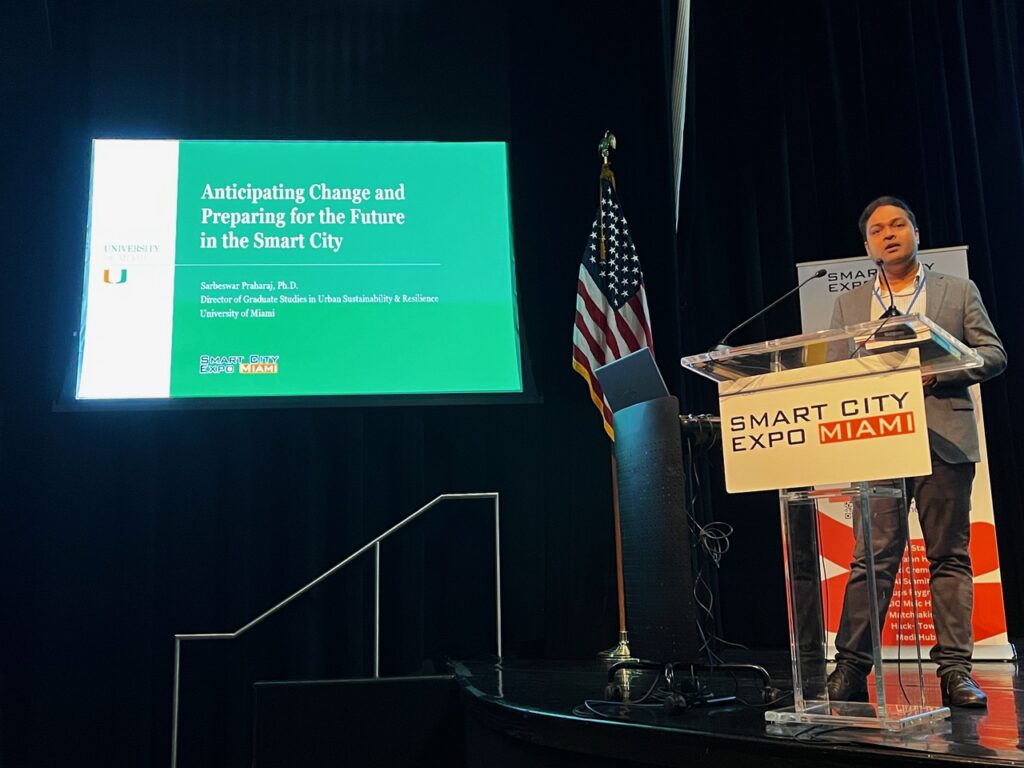
Similarly, Sarbeswar Praharaj, an assistant professor at the University of Miami, highlighted AI’s role in shaping sustainable urban growth. His presentation explored how AI can help cities collect and analyze vast datasets, like 120 years of temperature records, to guide future development.
“Smart cities are about understanding data that exists: collecting it and understanding the challenges we face,” Praharaj remarked. By using AI to model data, cities can anticipate future challenges and respond more effectively.
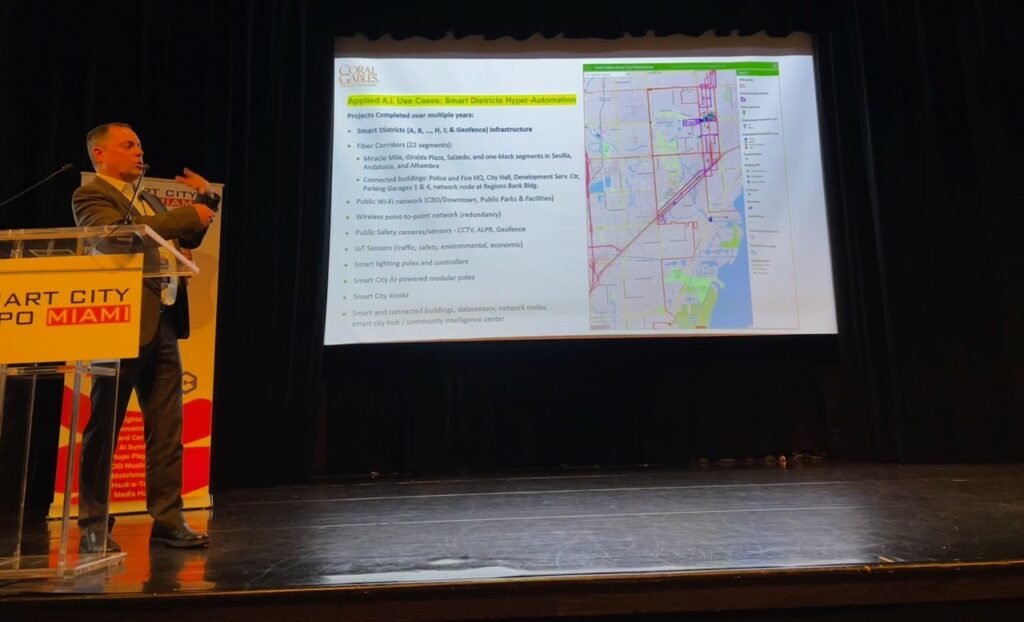
One of the standout examples of AI in action came from Raimundo Rodulfo, Chief Innovation Officer of Coral Gables. He demonstrated how his city has fully integrated AI across its public safety, infrastructure, and citizen engagement platforms. Coral Gables has implemented advanced AI systems for predictive crime analytics, situational awareness, and even a 360-degree digital twin model that helps city officials monitor and manage infrastructure in real-time. Rodulfo described how Coral Gables’ Smart City Lab, powered by AI, has become a model for other municipalities aiming to leverage technology for community well-being.
“AI is not only a tool we deploy to accomplish the sustainable development goals, but it’s also a tool we use to listen to the customer: our visitors and residents,” Rodulfo explained. By using AI to understand public sentiment, Coral Gables has created a more responsive, data-driven city management system.
Startups making waves
The Expo also showcased innovative startups working to address urban challenges. These startups offered solutions for issues like environmental sustainability, urban mobility, and waste management.
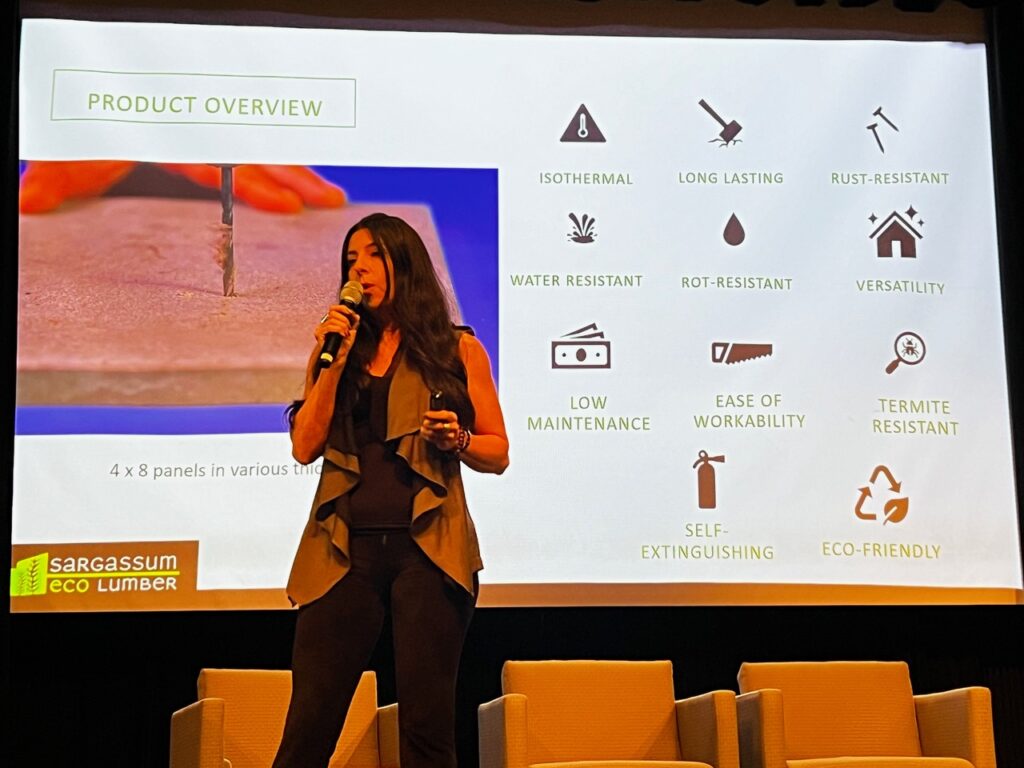
One startup that made headlines at the event was Sargassum Eco Lumber, founded by Raquel De Antonio. The company, which repurposes invasive sargassum seaweed into sustainable building materials, won the startup competition for its creative approach to environmental challenges.
De Antonio’s company uses a 40/60 mix of sargassum and recycled plastics to produce eco-friendly lumber that is resistant to moisture and pests. This innovative solution not only addresses the environmental impact of sargassum blooms but also reduces plastic waste. “These solutions can make a significant difference in how our cities respond to climate change,” De Antonio shared as she accepted the competition’s top prize.
Another standout startup was SyncData.ai, led by Fort Lauderdale-based CEO Alice McLaughlin. The company provides cost-effective digital solutions for governments using AI, with a particular focus on helping cities meet regulatory compliance standards.
McLaughlin discussed how her team worked with the Government of Ecuador to create a smart city maturity model with 91 key performance indicators. Her company’s solutions simplify regulatory processes for governments, allowing them to adopt smarter urban planning practices with ease.
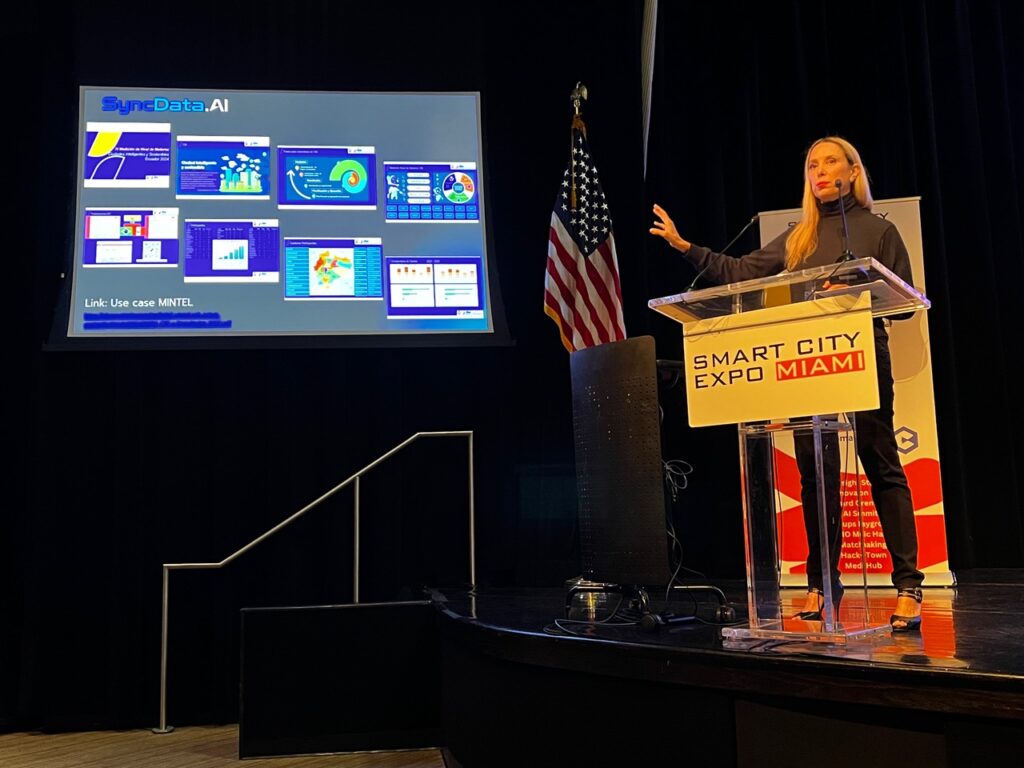
The startup pitches were a highlight of the Expo, showcasing how innovation can come from smaller companies that think outside the box. From tackling nutrient pollution in water bodies with Miami startup Phytoflora to developing AI-powered waste management systems with Miami-based Regenerate Waste Management, these startups are making tangible contributions to building smarter, more sustainable cities.
Resilience and the future of Miami
The future of Miami, a city that faces both environmental opportunities and challenges, was a central focus of the Expo’s discussions on climate resilience. With the city at high risk from climate change, experts called for proactive solutions to mitigate the impacts of rising sea levels, extreme weather, and urban heat islands.
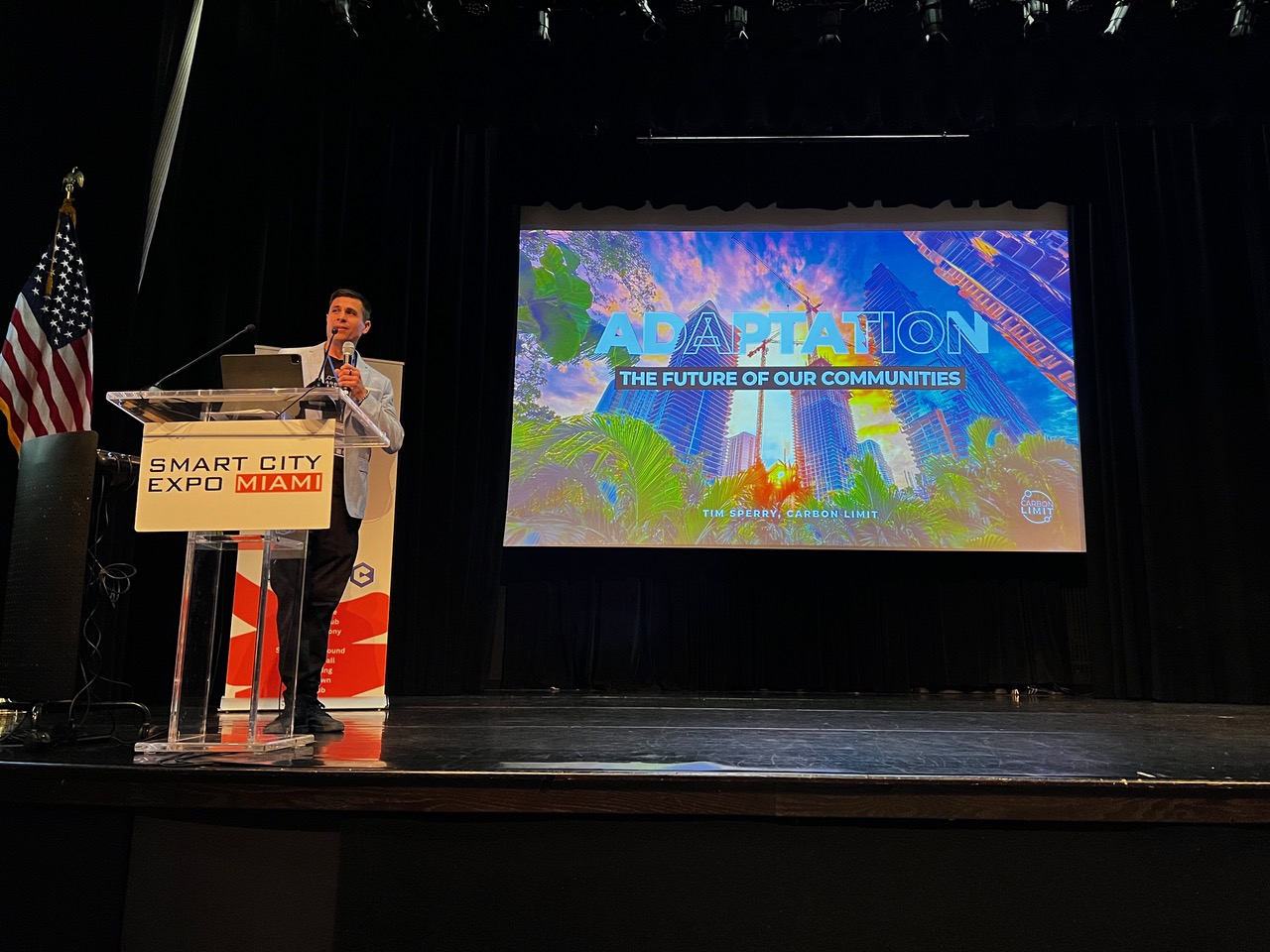
Tim Sperry, co-founder of CarbonLimit [pictured at top of post], spoke about the urgent need for Miami to embrace climate adaptation strategies. “Miami is ground zero for climate risk,” Sperry said, explaining that without immediate action, much of Miami-Dade County could be underwater by 2060.
Sperry’s company has developed innovative materials like CoolCrete, which helps reduce urban heat by keeping city surfaces cooler. He emphasized that integrating these types of climate technologies into urban planning could make Miami more resilient to the effects of climate change.
In addition to climate adaptation, there was a strong emphasis on making cities more human-centered. Several speakers, including Angela Mazzi of GBBN Architects, discussed the importance of designing urban spaces that promote health, well-being, and social connection. “You are a part of nature, you are not apart from nature,” Mazzi noted, stressing the need to create spaces that reduce stress and foster a sense of belonging.
The Expo concluded with a call to action for cities like Miami to embrace a holistic approach to urban planning – one that incorporates technology, sustainability, and human-centered design. And with AI, startups, and innovative thinkers having shared their perspectives at Smart City Expo Miami, the Magic City seems one step closer to becoming a truly “Future Ready” city.
Pictured at top of post: Tim Sperry of Carbon Limit. All photos by Riley Kaminer
READ MORE IN REFRESH MIAMI:
- SpotHero and Miami Parking Authority team up to tackle Miami’s parking problem
- Get ready for a full-fledged Smart City experience Sept. 23-25 at MDC in downtown Miami
- Expanding horizons: Miami area’s soft-landing services pave the way for international businesses
- South Florida’s tech hub is officially ClimateReady, with $19.5M federal grant in tow
- Is your business compliant? If not, SyncData can help
- Carbon Limit’s carbon capturing cement continues to shine on global tech stage
- Plug it in, plug it in! PortMiami launches Shore Power, largest on the U.S. East Coast
- This Earth Day, let’s shine a spotlight on South Florida innovators building a greener world
- Seaweed SOS: Turning beach blight into eco lumber gold

- Comp AI turns compliance headaches into a $34M Series A - September 17, 2026
- Zèya zooms past 100,000 downloads, sets its sights on the next million - September 16, 2026
- Grip is taking the guesswork out of shipping the cold stuff - September 15, 2026