


By Riley Kaminer
Industries that rely on massive facilities – factories, construction sites, and energy plants, for example – are facing a growing problem: They lack up-to-date, accurate digital models of their real-world spaces. Without these models, renovations are inefficient, maintenance planning is guesswork, and operations can be slowed by outdated information.
The challenge is not collecting the data (laser scanning technology has made that easier) but rather managing and sharing the massive files these scans generate. That’s where Cintoo comes in.
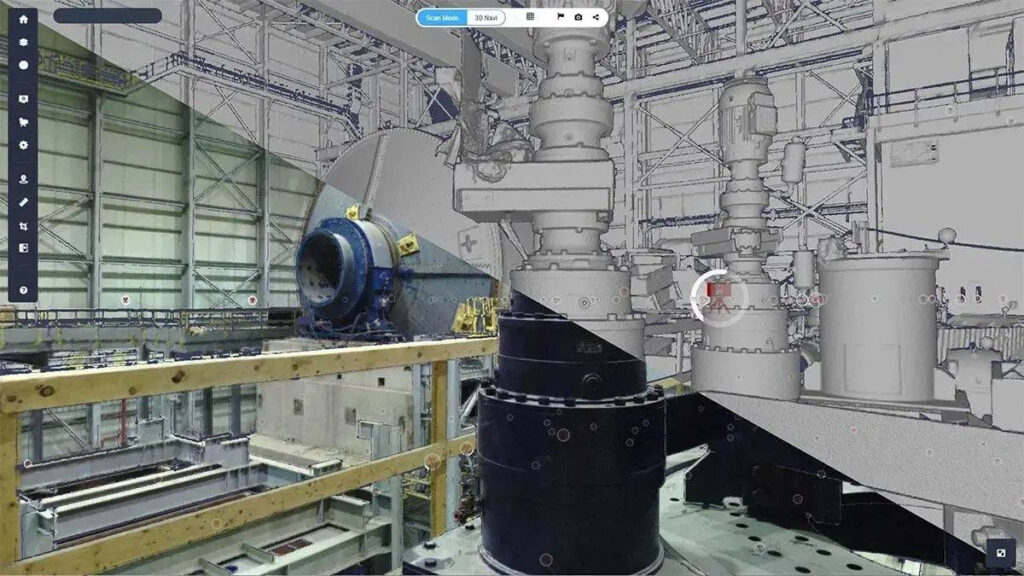
The Miami company provides a cloud-based platform for managing what’s called a digital twin: a precise, three-dimensional digital replica of a real-world environment. These digital twins are crucial for industries like construction, automotive manufacturing, and energy, where companies need up-to-date models of their facilities to plan renovations, optimize workflows, and manage assets.
French native Dominique Pouliquen moved to Miami six years ago because, well, it just made sense. After spending years in Silicon Valley, the nine-hour time difference from France, where Cintoo’s development team is based, made running the company difficult. Miami, with its rapidly-scaling tech scene and more manageable time difference, became the perfect fit.
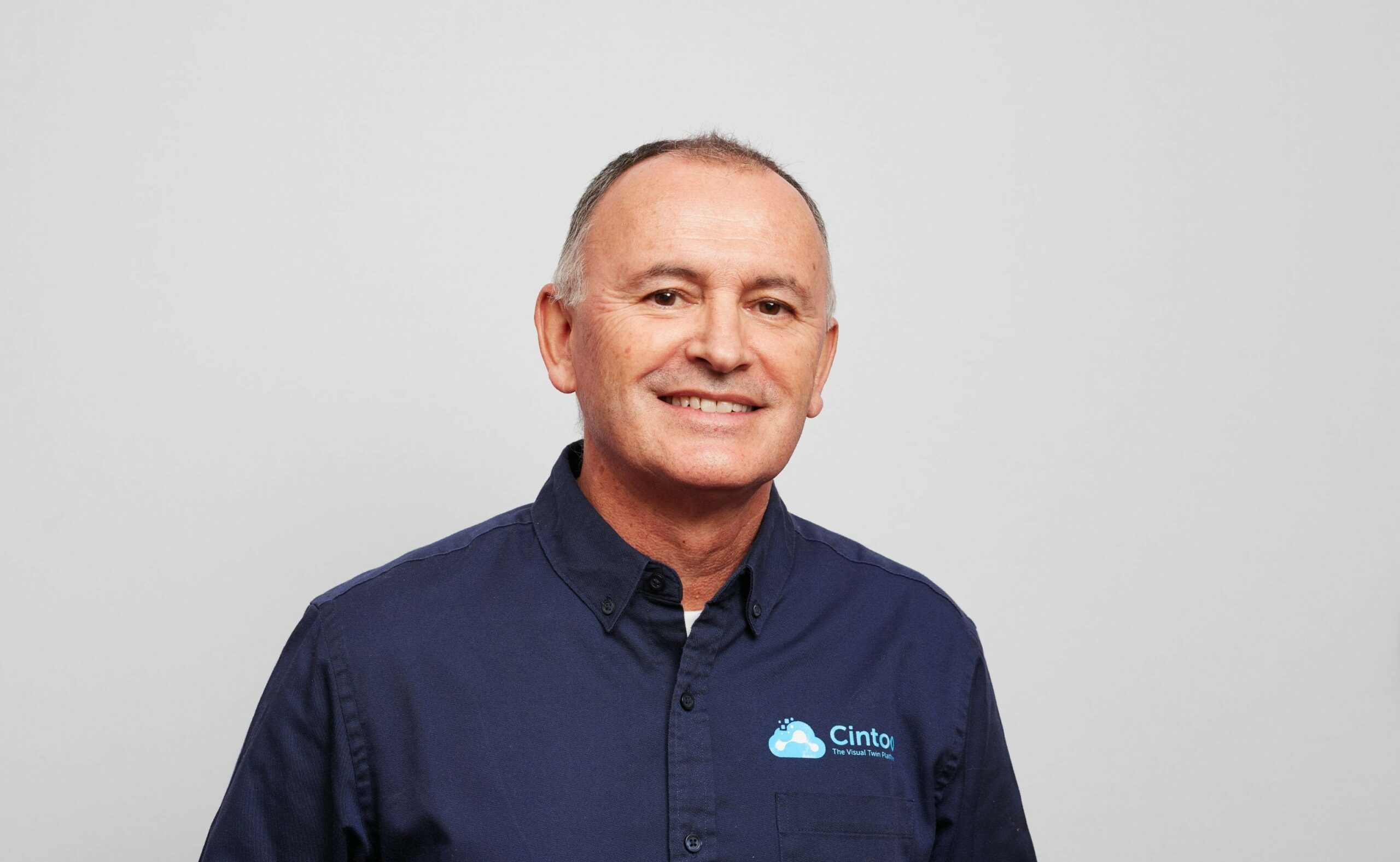
“We serve three major industries,” Pouliquen, Cintoo’s CEO, told Refresh Miami. “Architecture, engineering, and construction; automobile manufacturing; and the energy sector, primarily oil and gas.”
The need for digital twins in these industries is clear. Car manufacturers like Ford, GM, and Tesla use Cintoo to create virtual versions of their factories so they can plan renovations without disrupting production. In the energy sector, companies like BP and TotalEnergies use digital twins to manage sprawling refineries and pipelines.
The process starts with laser scanning. High-powered scanners capture every detail of a facility in 3D, but the resulting data is massive – so large that sharing and collaborating on it can be a challenge.
Enter Cintoo.
“We developed a compression technology that makes it possible to host these digital twins in the cloud, making them accessible to teams across the world,” Pouliquen explained.
Artificial intelligence is playing an increasing role in Cintoo’s technology. Right now, AI helps interpret raw scan data, turning it from pure geometry into meaningful, actionable insights.
“AI automatically detects different types of equipment, counts how many pumps you have, identifies their locations, and links this data to maintenance logs,” Pouliquen said. “It turns raw scans into something that companies can actually use.”
While Cintoo is already an essential tool for many companies, Pouliquen sees an even bigger future. One concept he’s particularly excited about is the industrial metaverse – using Cintoo’s digital twins to create immersive, navigable virtual spaces.
“Imagine being able to walk through your factory as if you were in a video game,” he said. “You could collaborate with colleagues as avatars, make decisions in real time, and manage operations from anywhere in the world.”
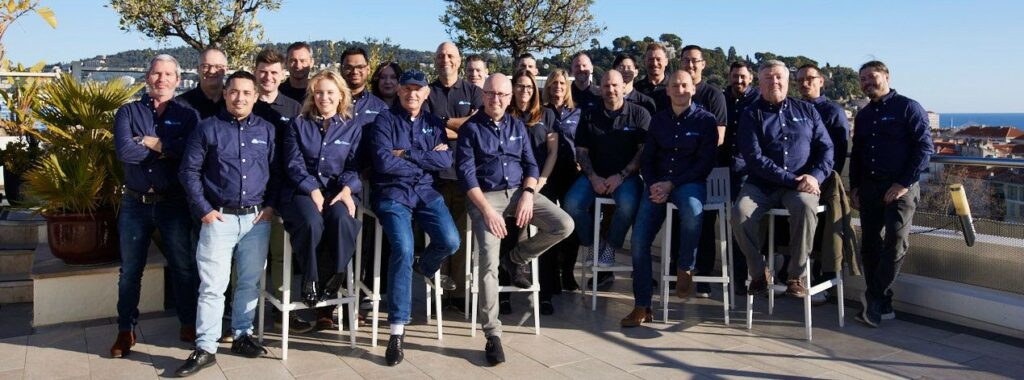
Since launching, Cintoo has grown to nearly 100 employees, with a significant presence in the U.S. but a fully remote workforce with Miami as its center of gravity. The company recently closed a Series B funding round, raising €37 million to fuel further growth. Previously, Cintoo raised a $6 million Series A and a “few million more” at the seed stage, according to Pouliquen.
As Miami continues to attract global innovators, Pouliquen is also playing a role in shaping the city’s tech future. He’s involved with French Tech Miami, a network of French entrepreneurs working to position the city as a top destination for international startups. The goal? To show that Miami isn’t just a great place to live: It’s a great place to build.
READ MORE IN REFRESH MIAMI:
- CAST AI secures $35M to revolutionize cloud cost optimization
- Israel’s Spinframe sets up in Miami to offer AI-powered vehicle-inspection systems
- Inside Miami’s smart city revolution: AI, startups, and future-ready communities on full display at Smart City Expo Miami
- Digital twin platform MindBank AI lands $1.2M government grant to optimize your mind – and it’s literally out of this world
- Digital Twin Marine’s innovative system creates 3D models of vessels in a matter of days, not months

- Grip is taking the guesswork out of shipping the cold stuff - September 15, 2026
- Joe Russo helped build Palm Beach Tech. Now he’s building from it. - September 14, 2026
- Koywe’s answer to slow international payments started with a lifelong friendship - September 9, 2026