


John Pastre hired a software developer in Kazakhstan to help build an app. Everything was great… until he found out how hard it was to pay him. Pastre had paid freelancers abroad before, but this transfer seemed to take forever. The eventual solution? Sending dollars to a U.S. bank account and paying his team in stablecoins, a type of digital currency that can track the value of the dollar.
That workaround became the basis for SwiftFi, the Miami startup Pastre built with Juan Terra. The two met at the University of Virginia, though they came to crypto for different reasons. Pastre wanted to pay his team. Terra started building computers in his mom’s basement to mine Bitcoin around 2013. His parents were from Latin America, and stories about what high inflation could do to a currency had made him curious about how money holds its value.
“We exist as the invisible plumbing that gets people paid faster,” Pastre told Refresh Miami.
Consider a freelancer in Colombia working for a U.S. company. Getting paid into a U.S. account solves “half the problem,” Terra said. To use that money at home, the freelancer may still need to send an international wire, pay fees and wait for a local bank to clear it.
“Those extra three to five business days can be the difference between being on time for your rent, paying for your groceries, whatever it may be,” Terra added.
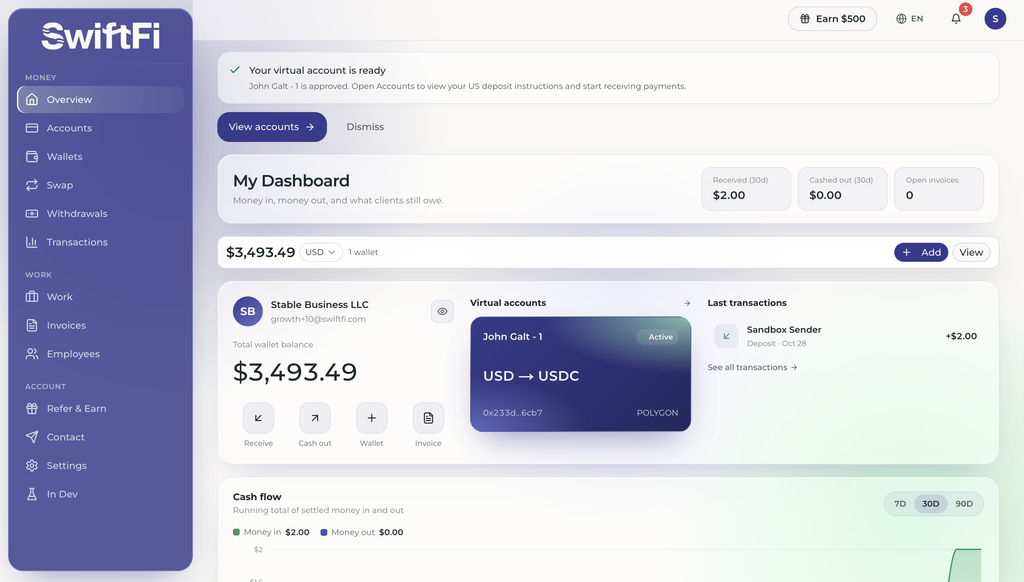
SwiftFi gives workers U.S. bank details they can pass along to the company paying them. It converts incoming payments to stablecoins for a 3% fee. Workers who use SwiftFi to cash out to a local bank account pay another 1%. Terra said some customers already spend their stablecoins with a debit card. Others use a crypto exchange to convert them to local currency.
SwiftFi has begun rolling out a wallet that lets customers keep funds on the platform and swap them for other digital currencies. Next up is a debit card. “It’s really just about listening to what our customers want,” Pastre said. “And right now it’s debit cards.”
For Pastre, Miami is a place to build a business around a problem people already know well. Local companies hire developers and virtual assistants abroad. People who have moved here know firsthand what it takes to move money across borders.
“You run into people from all different walks of life,” Terra said, “and it feels like everybody has a general understanding of stablecoin crypto here.”
Pastre had noticed a change at crypto conferences. These days, he said, there are run clubs where he might once have expected a boat trip. In his view, “boring is better for crypto.” Somewhere in Kazakhstan, a software developer is probably fine with a boring payday.
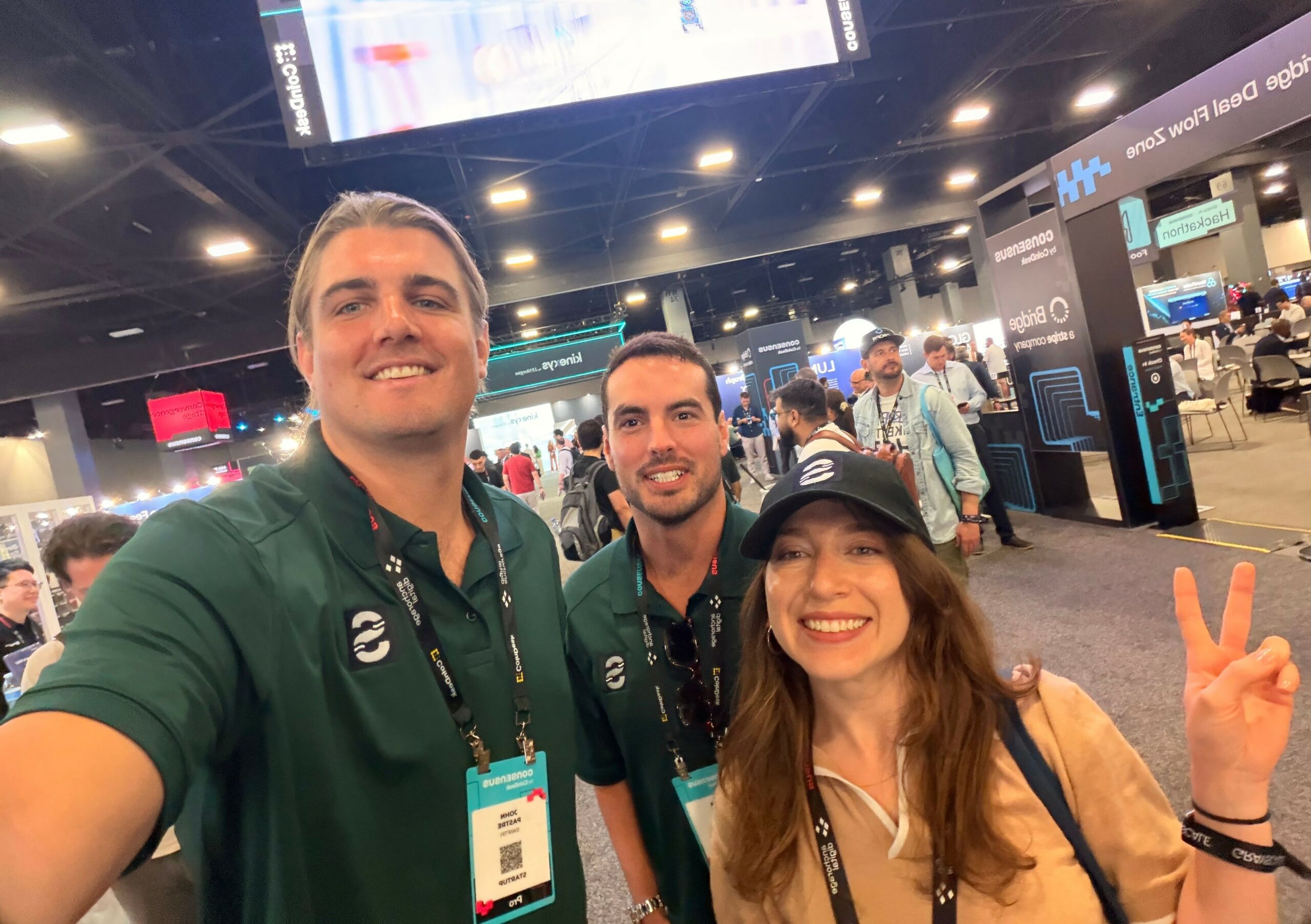
Pictured above: SwiftFi team members, left to right: Co-founders John Pastre and Juan Terra; plus Laura Peñuela (marketing lead).
READ MORE IN REFRESH MIAMI:
- AI is moving fast. Can our databases keep up? A Q&A with South Florida engineer Harish Shenoy
- Inkle acquires Finally’s bookkeeping division and sets sights on South Florida growth
- Can Bitcoin solve the broken homebuying math? Milo thinks it can
- Jeeves raises $110M to take its stablecoin play global

- For SwiftFi, crypto’s big moment is payday - November 12, 2026
- Months after setting its sights on Miami, AI security startup Pillar to be acquired by Vanta - November 10, 2026
- Astral raises $5.5M to make AI-powered tutoring available nationwide - November 9, 2026