

At some point over the last two years, software crossed a line. Data stopped being something applications simply processed and started behaving more like instructions. That shift, subtle at first, is what pushed Dor Sarig to rethink everything he thought he knew about security.
“AI is software, but it’s a new kind of software,” Sarig told Refresh Miami. “The way we build it and the way we interact with it is completely new. So everything we know about securing software also needs to change.”
Sarig is the co-founder and CEO of Pillar Security, a company built around a simple but unsettling idea: in the AI era, the separation between code and input no longer exists. Traditional software followed fixed logic. Users could interact with it, even try to break it, but the system itself was enclosed and predictable. AI changes that.
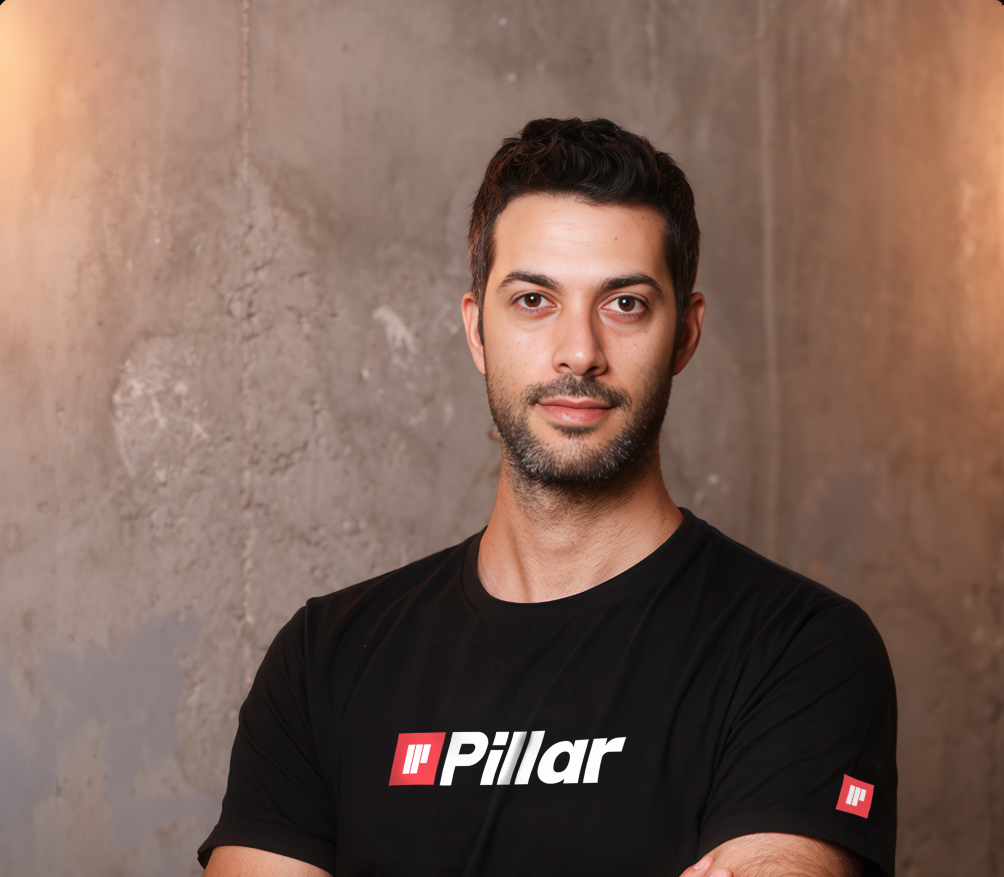
“In the intelligence era, data is now executable,” said Sarig [pictured above]. “Every input that comes in contact with a model can serve as instructions.” In other words, users can alter how an application behaves just by interacting with it. The data plane and the control plane collapse into one.
That collapse creates a blind spot for security teams. “It’s no longer code driven. It’s prompt driven,” Sarig said. “It’s not databases anymore. It’s models. It’s context.” The result is a new attack surface that most organizations haven’t fully mapped, let alone secured.
Pillar’s role is to bring visibility where there often is none. The platform scans a company’s ecosystem to discover every AI system in use, whether it lives in code repositories, cloud services, or employee endpoints.
“You can’t protect what you can’t see,” Sarig said. Once that inventory exists, companies can begin setting policies, defining guardrails, and deciding what should be allowed or blocked.
From there, Pillar moves into risk validation and runtime protection. The platform can sit inside AI-powered applications, inspecting inputs in real time for sensitive data, privacy risks, or attempts to manipulate a model’s behavior.
“We’re wrapping around the application,” Sarig said. “Everything that touches it goes through our sensors.”
The scale of hidden AI usage often surprises customers. Sarig described a recent proof of concept with a Fortune 300 company where Pillar scanned more than 30,000 code repositories. The result: 8,000 AI models and 400 AI systems that the security team didn’t even know existed. “Those numbers were completely new to them,” he said.
Sarig and his co-founder and CTO Ziv Karliner started building Pillar in late 2023, during a turbulent period in Israel that slowed its earliest momentum. By 2024, the team began hiring and working closely with customers to define what AI security actually looks like in practice.
Today, the company has around 20 employees across Israel and North America, has raised just over $9 million in seed funding, and is preparing to kick off its Series A.
Sarig, who relocated from Israel to Miami with his family last year, sees the city as a long-term base. “We want to build a real hub here,” he said. “Miami is booming, and the AI talent is strong.”
Looking ahead, Sarig believes the next security shift will come from autonomous AI agents. Systems that browse the web, read emails, and act independently introduce risks that existing tools were never designed to handle. “All security controls were built to protect humans,” he said. “But what happens when the operator is an agent?”
In Sarig’s view, that question will soon stop being theoretical. And the companies that answer it early may find security isn’t a blocker at all, but the thing that finally lets AI move faster.

READ MORE IN REFRESH MIAMI:
- This cybersecurity expert built a business by thinking like a criminal
- AccessGrid raises $4.4M to turn your smartphone into a universal key
- This startup raised $2.6M to redefine cybersecurity with a conscience
- From bartender to MasterCard: Toni Yates’ cybersecurity career journey with help from Miami Dade College

- After exiting Cal AI, 19-year-old Miami founder raises $10M to put AI on your wrist - October 9, 2026
- Can Bitcoin solve the broken homebuying math? Milo thinks it can - October 6, 2026
- Emma Harris’ second act is off the wall - October 5, 2026