


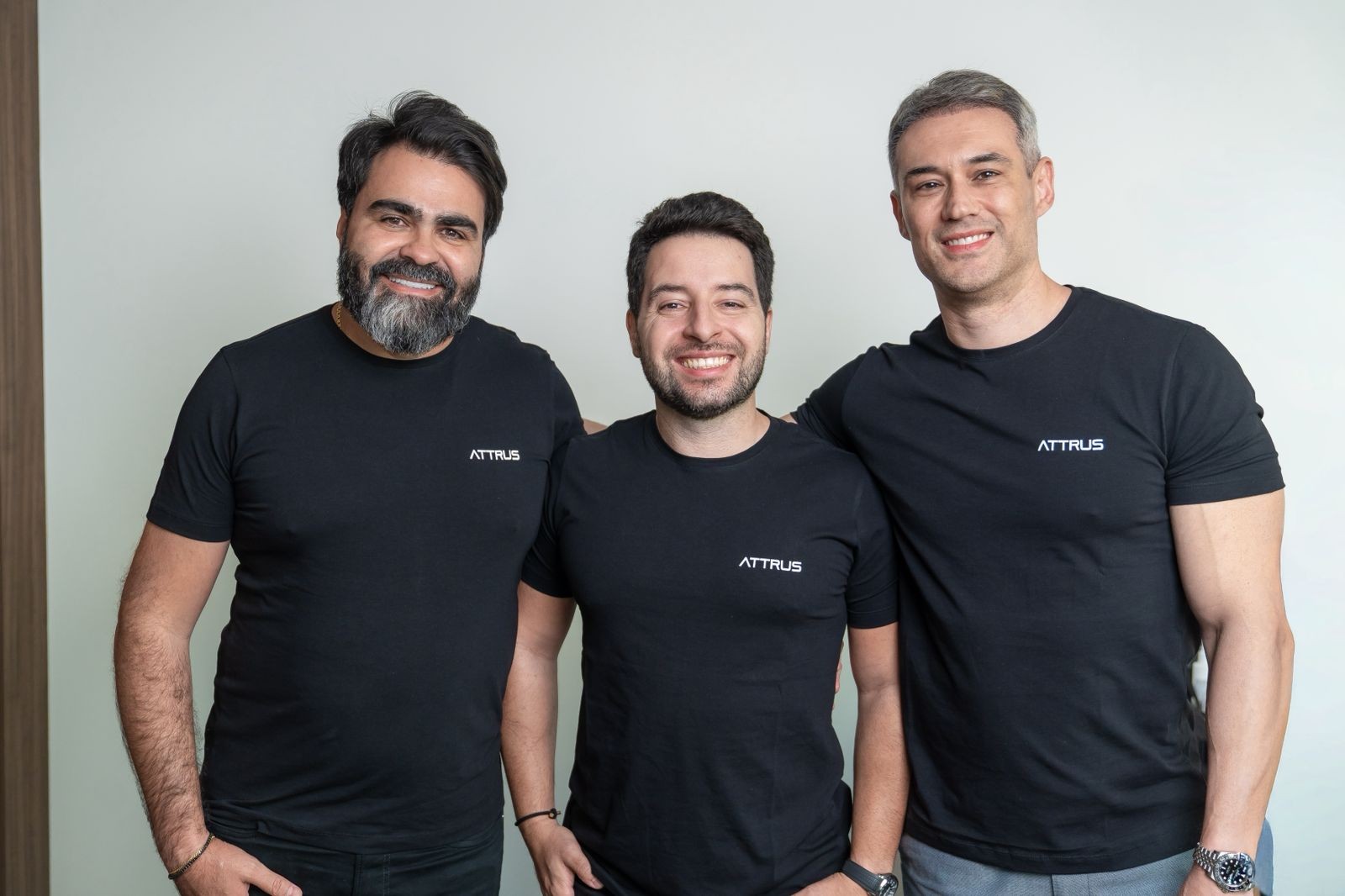
The moment that pushed Stephano Maciel wasn’t a failed payment. Much to the contrary, it was one that worked. That is, after a long chain of emails, manual checks, and delays that felt out of place in a digital economy.
“There was no real technology to send something as simple as an invoice payment to China. Everything still ran through email,” Maciel told Refresh Miami.
That friction became the starting point for ATTRUS.
At first, the company explored remittances. But a pattern kept showing up. Different industries, same problems. Companies trying to operate across borders were running into the same issues around payments, compliance, and local complexity.
So the team shifted. Instead of solving one use case, they began building infrastructure to help companies operate in new markets without getting stuck in regulation, tax, and fragmented systems.
“We wanted companies to be able to do business locally in new markets without dealing with all the local complexity,” he said.
That meant building from scratch. ATTRUS set up regulated entities across countries and created its own treasury infrastructure to support them. It was a heavy lift, but it revealed another gap.
Their customers were operating globally and managing that through traditional banks.
“If you’re receiving wires from everywhere, your account can get blocked pretty quickly,” Maciel said.
About a year ago, ATTRUS introduced a global account product designed to address that issue. It allows companies to receive, hold, and move funds across regions while still accessing local payment systems. The company merged this with its existing infrastructure and brought customers into a single platform.
“We saw an opportunity to bring everything together into one system,” he said.
Today, ATTRUS has around 100 employees and a growing U.S. presence. That expansion is centered in Miami, where Maciel relocated roughly two years ago.
“Miami gives us access to people from across Latin America, all in one place,” he said.
For a company operating across regions, that mix matters. It has also shaped how ATTRUS structures its team. The company is now building regional units, including a focused push in the U.S. led by executives with experience across both Latin America and the U.S.
Earlier this month, ATTRUS announced that it has tapped Tomas Escorcia as the head of sales and business development for its operations stateside. Escorcia is tasked with growing the Brazilian company’s footprint here, all from their Miami headquarters. Previously, Escorcia held leadership positions at Inter&Co and Amazon.

Of course, ATTRUS is not alone in their cross-border payment pursuits. Miami is increasingly a hub for the most ambitious cross-border startups.
Why? The opportunity is clear: Global payments are still dominated by large banks, where onboarding can take months or even years, according to Maciel. That lag is increasingly out of sync with how companies grow today. Many operate across borders from day one, but their financial infrastructure hasn’t kept up.
ATTRUS is betting that will change, and that Miami is the right place to build from.
“We can reach Latin America, the U.S., and Europe much more easily from here,” he said.
READ MORE IN REFRESH MIAMI:
- OpenFX raises $94M on the premise that moving money should feel like sending a text
- Inter bets on Miami as it brings its super app to the US
- How Miami became a launchpad for cross-border payment startups
- alfred wants to make Latin America feel like one country… at least for global payments
- Palla raises $14.5M to power instant cross-border payments for banks

- After exiting Cal AI, 19-year-old Miami founder raises $10M to put AI on your wrist - October 9, 2026
- Can Bitcoin solve the broken homebuying math? Milo thinks it can - October 6, 2026
- Emma Harris’ second act is off the wall - October 5, 2026