


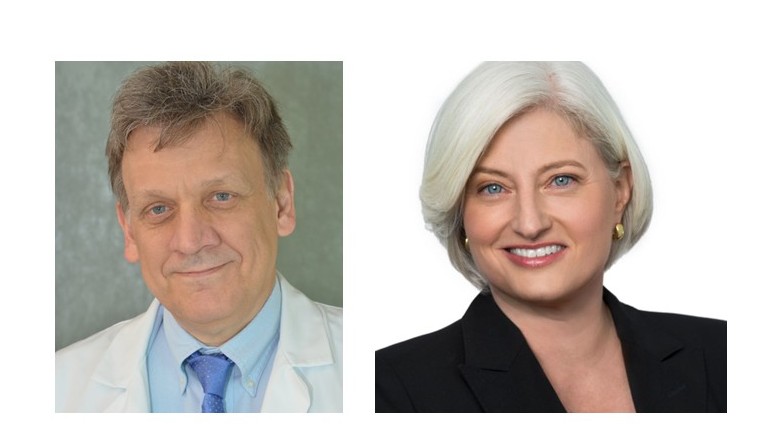
Dr. Evangelos Badiavas, a University of Miami Health System dermatologist, theorized that wounds produced from Epidermolysis bullosa (EB), a group of rare genetic skin disorders characterized by fragile skin that blisters, tears and falls off easily, could be treated successfully using the extracellular vesicles from stem cells. Extracellular vesicles are vital for intercellular communication, enabling traffic of proteins, lipids and RNA between cells.
Badiavas is the scientific founder of Aegle Therapeutics, which has exclusively licensed its patented EV harvesting technology from UM. Aegle is hoping to bring its ointment, containing extracellular vesicles, to market by the end of 2027 or early 2028.
“In 2020, we secured funding to move to a production system that would qualify and get our IND (Investigational New Drug Application) with the FDA and move into clinical trials,” said Steve O’Hara, chairman of Aegle Therapeutics and of New World Angels, a Florida angel network and one of Aegle’s first backers.
Since then, Aegle performed its first human-trial on burns, sponsored by a program under the Department of Defense. O’Hara said the first patient was healed within four weeks.
Last summer, Aegle began clinical trials on dystrophic epidermolysis bullosa (DEB). DEB is a specific type of EB and prevents the creation of collagen in the skin, affecting the lower layers of the skin, resulting in blistering and scarring that can be severe. It’s the result of a gene mutation and is usually apparent when a baby is born or in early childhood.
O’Hara said the three adults enrolled in the trial, all with chronic wounds from EB, have shown “amazing progress” as a result of being treated with the ointment containing extracellular vesicles. “We extract all the good things from a healthy cell and put them in a proprietary process in a cream that when applied, allows the body to self-heal,” O’Hara said.
This is an ongoing clinical trial. The team is looking for five pediatric patients with chronic wounds from EB. Trial sites are in Philadelphia, Phoenix and Los Angeles. Those enrolled in the trial will be monitored for six months, said O’Hara.
Aegle is seeking $50 million in expansion funding from venture capital firms to build out production and manufacturing and to conduct the pivotal trial that will allow them to obtain approval from the FDA and take it to the market. “This will be a treatment that could get to people suffering from the disease by the end of 2027 or early 2028, with FDA approval,” said O’Hara. He’s hopeful the ointment will also be used to treat other wounds, including diabetic lesions.
Shelley Hartman, Aegle’s CEO, co-founded the company in 2014, along with Robert Williamson Jr. “We are excited about the compelling clinical data that is emerging from our Phase 1/2a RDEB study,” said Hartman. “Aegle is focused on the continued development of AGLE-102 to address the complex needs of this patient population and is raising capital to fund this important work.”
This year, New World Angels invested $697,500 in Aegle Therapeutics. In total, Aegle has raised just over $19 million in venture capital.
“We’re excited to deepen our commitment to Aegle Therapeutics as the company advances its mission to deliver breakthrough therapies for a wide range of dermatological conditions,” said Jessica Miley, New World Angels’ managing director. “The encouraging early data from both the burn and DEB clinical trials have reinforced our conviction in Aegle’s scientific approach and commercial potential.”
Pictured above: Aegle’s scientific founder, Dr. Evangelos Badiavas, and co-founder and CEO Shelley Hartman.
READ MORE IN REFRESH MIAMI:
- Aegle Therapeutics’ big mission: Tackling a horrific pediatric disorder
- New World Angels launches Innovation Fund to write pre-seed checks – Refresh Miami
- Galatea Bio secures $25M to help transform global genomic research and precision medicine
- First Ascent Biomedical awarded $2M Florida Cancer Innovation Fund grant
- Myosin Therapeutics closes $3M seed round to advance its brain therapies, including for cancer
- Meet the startups shaping the future of healthcare, from Miami to the world

- Hands-on training from Maker Cities helps those interested in STEAM build their vision - October 23, 2026
- Heirloom helps real estate agents and heirs with complexities of inherited properties - September 18, 2026
- Simple gaming app created by Boca teen helps those with cognitive decline - August 28, 2026