


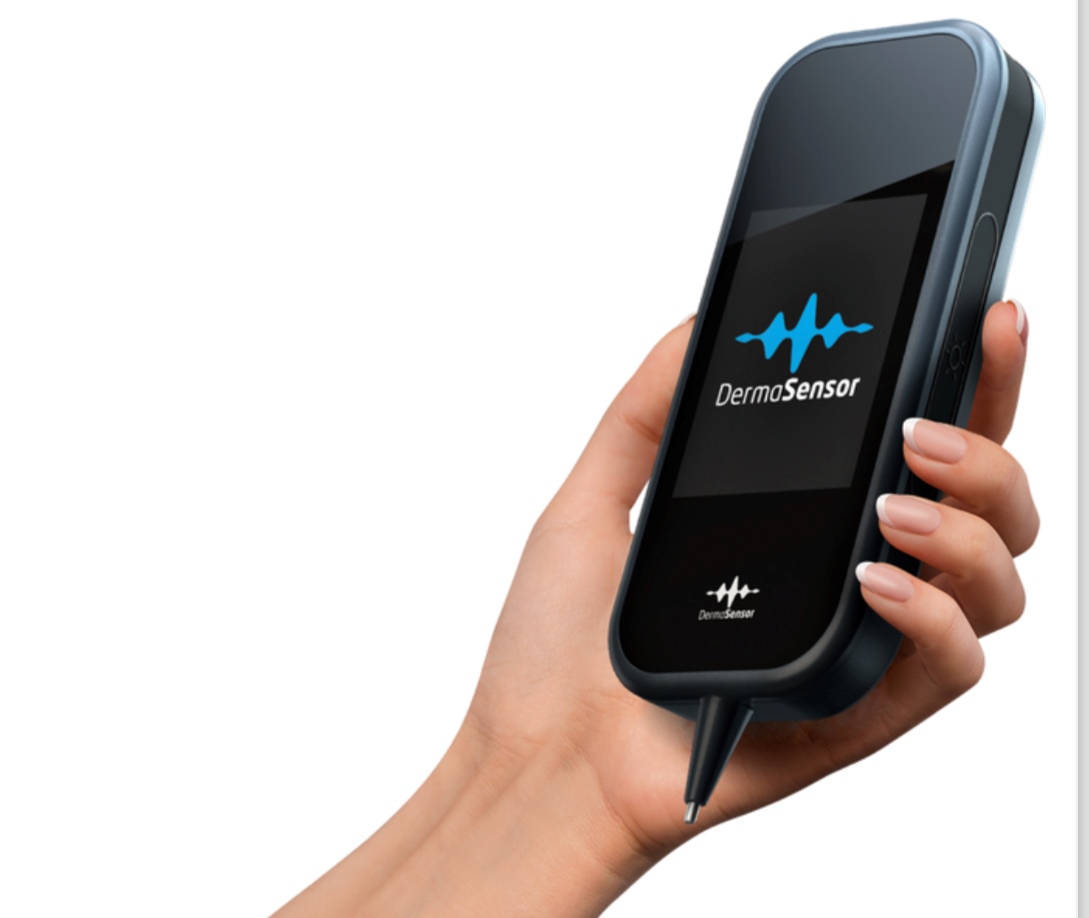
DermaSensor, a Miami-based medical device technology company that aims to revolutionize skin cancer detection in primary care offices, announced today it has raised $16 million in Series B funding.
This latest financing round includes most of DermaSensor’s major existing investors, as well as new institutional investors including Pier 70 Ventures, Kern Venture Group, GenHenn Capital, and an undisclosed strategic investor.
The funding will be used to fuel the commercialization of its FDA cleared, non-invasive skin cancer detection device that delivers a simple “point and click” experience for primary care physicians. In total, the startup has raised $43 million to date.
“Having received FDA De Novo clearance of its FDA Breakthrough device last year, we are impressed with how quickly the company has been able to gain adoption for this new product category they have created,” said Dr. Preetha Ram, managing partner at Pier 70 Ventures, in a statement. “We are proud to partner with DermaSensor to help empower primary care practices nationwide with an evidence-based and cost-effective solution that has been shown to improve clinical decisions and cancer detection.”
Indeed, the need is huge. Skin cancer afflicts one out of five Americans by the age of 70, and there are about 5.5 million new cases each year. But 99% of skin cancers – including the most deadly of them, melanoma – are curable if detected early, yet 9 out of 10 people don’t visit a dermatologist regularly and access to dermatology specialists is particularly challenging in rural areas. That’s why DermaSensor focuses on better equipping primary care physicians to better assess and detect skin cancer, says CEO and co-founder Cody Simmons.

It’s been a long road to market. Starting it all was Miami medtech serial entrepreneur Maurice Ferre, DermaSensor’s chairman, who also believes that early detection of skin cancer is a public health issue because not enough people have access to dermatologists. DermaSensor’s patented technology was pioneered at Boston University and University College London, and the device had been undergoing development since around 2012 starting with collaborations with dermatologists in Florida. Through the years the device evolved from a 30-pound desktop system the size of a microwave to the hand-held device it is today.
A major milestone was DermaSensor’s FDA clearance in 2024, clearing the path to commercialization. That was followed this year the publication of two pivotal FDA studies together showed that DermaSensor’s hand-held AI-powered device detected skin cancer with 96% sensitivity and also helped primary care physicians cut missed skin cancer referrals in half.
Commercialization has been underway since mid-2024. Today, DermaSensor devices are used in seven health systems around the country and more than 200 doctor locations, Simmons told Refresh Miami. The device has been used to scan over 20,000 skin lesions, marking an average quarterly growth rate of 117% since its U.S. commercial launch. What’s more, the company’s AI training dataset has already increased several-fold.
“With hundreds of physicians already using our device at health systems, and hundreds more at private practices, it is clear that our first-in-class device is having a major impact on patient care, with approximately 2,000 suspicious skin cancers already detected for referral to dermatology,” said Simmons.
In addition to commercial expansion, the funding will also support three new pipeline programs as well as clinical evidence generation for the existing algorithm. Simmons isn’t announcing details just yet, but said they all use the same device hardware that is currently in use by customers. DermaSensor is a team of about 18 full-time employees, plus contractors and manufacturing partners.
“Completing our financing in this challenging funding environment, especially at a modest increase in valuation from our early 2022 financing, is a result of our strong commercial traction, top-tier clinical evidence, and robust product pipeline for addressing this large, longstanding unmet clinical need,” Simmons said.
READ MORE IN REFRESH MIAMI:
- DermaSensor’s device, now in the market, detects 96% of skin cancers and increases skin cancer referrals, FDA studies find
- DermaSensor gains FDA clearance for its AI-powered skin cancer detection device
- Insightec receives new FDA approval of Parkinson’s treatment
- GOVO invests in Miami-based Virtual Vision Health
- Sofya bets on Miami to scale frontier AI in healthcare, building a second brain for doctors

- Up, up, up: South Florida on way to another strong VC year, PitchBook’s Q3 report shows - October 8, 2026
- 8+ things to know in #MiamiTech: Mana Tech to launch Tech Cities of America; FAU reels in quantum grant; plus news from Global Ventures, HighPost Capital, PlanHub, Calculum, job opportunities & more - October 7, 2026
- 10+ things to know in #MiamiTech: News about Ondas, Visium, Misfit Labs, OBE Power, The Xtream Group, Stephen Ross, Blue Frontier, Zeo Scientifix & more - September 27, 2026