



By Riley Kaminer
Dr. Barry Issenberg has always been fascinated by technology.
Raised in North Miami Beach, Issenberg’s early days were spent amid the beeps and blips of Atari 800s, a foreshadowing of his future at the intersection of healthcare and technology.
As a kid, his mother worked at the University of Miami lab led by the late Michael S. Gordon, who innovated in the application of technology to medical education. Through his mom, Issenberg was able to volunteer in the lab and work under Gordon himself.
After Issenberg attended Emory and the UM Medical School, a herniated disk led to a sabbatical, during which he deepened his involvement in the simulation lab. This pivotal year reaffirmed his passion, prompting a career where his interests in technology, music, and healthcare could merge. He has spent the last 25 years training healthcare professionals to provide effective patient care through advanced simulation technology.
At the Gordon Center, Dr. Issenberg oversees the training of over 20,000 professionals yearly. The center’s most notable innovation, “Harvey,” is a world-renowned cardiopulmonary patient simulator that allows medical practitioners to precisely diagnose a wide array of cardiac diseases.
With a focus on both technological innovation and educational efficacy, Dr. Issenberg believes in the power of medical simulation to reduce medical errors, the third leading cause of death in the U.S.
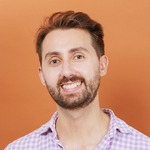
“Medical simulation is a technology or process that attempts to replicate what someone who takes care of a patient might see in a patient environment,” Issenberg [pictured below] explained to Refresh Miami. This takes various forms: anything from a software simulation to a mannequin to a real person (a so-called “standardized patient” – or actor, in layman’s terms).

Under Issenberg’s leadership, the Gordon Center has maintained a partnership with the U.S. Army, preparing Forward Surgical Teams for deployment through rigorous training. It’s a collaboration that underscores the center’s commitment to excellence and the real-world impact of its programs.
Issenberg’s vision for the future is a blend of traditional and cutting-edge methods, where tactile experiences are augmented by digital simulations and artificial intelligence. He foresees a more personalized education approach, enabled by artificial intelligence, to enhance learning efficiency and outcomes.
As for the impact of AI, Issenberg is watching out for two main applications: first, training learners; and second, augmenting doctors’ performance. “Whether it’s using AI to help evaluate x-rays or CAT scans, or synthesizing vast amounts of patient data, it’s more and more helpful in clinical reasoning,” he said. That will give doctors more time to interact directly with their patients.
When it comes to training, “artificial intelligence will allow us to individualize education,” asserted Issenberg. By tracking how each student is progressing, AI will be able to customize learning to focus on their deficiencies – creating a much more efficient learning process overall.
For Issenberg, the Gordon Center’s work is far from an academic exercise. Rather, they are life-saving tools that shape the future of healthcare, ensuring that the next generation of medical professionals is as prepared as they can be for the challenges ahead. And it all starts in Miami.
READ MORE IN REFRESH MIAMI:
- TeselaGen’s AI-powered platform enables biotech innovation to happen faster and at scale
- Clayful helps kids navigate mental health challenges, providing K-12 schools with insights along the way
- DeLorean raises $7.55M to enable enterprise companies to unlock AI innovation
- Pharma giant GSK partners with StartUP FIU again to host student-targeted Innovation Challenge
- Endear Health of Miami raises $8M to scale its healthcare engagement platform for seniors
- With a virtual care platform, MedSys provides remote patient monitoring for chronic care and more
- Modern Trials appoints top board members to spur growth of clinical trial platform
- Jeeves raises $110M to take its stablecoin play global - September 30, 2026
- It’s a deal, #MiamiTech! Carnegie Mellon to open a Wynwood campus - September 30, 2026
- Togal.AI is building. Lightning Capital is backing it. Both are betting on Miami. - September 29, 2026