


The most important parts of the internet are usually invisible. The same is becoming true for fintech.
Behind every checkout button, invoice, or vendor payout, there’s a layer of infrastructure moving money from one place to another. For Miami-based Payabli, that invisible layer is the product. And over the past year, it’s scaled quickly.
“2025 was a very formative year for us,” co-founder Joseph Elias Phillips told Refresh Miami. The company raised a $28 million Series B and has reportedly grown revenue 4x year over year, reaching the high eight figures. Its platform now powers close to 100,000 merchants, with a team of around 130 people, the company reports.
That growth came alongside a shift in how the company operates. Payabli brought in senior leadership across strategy, sales, product, and security.
At the same time, it started landing larger partners.
One of the clearest signals is its deal with Huntington Bank, a Fortune 500 institution with more than 500,000 small business customers. Instead of building payments tools internally, Huntington is embedding Payabli’s infrastructure directly into its online banking experience.
For users, the change is simple. Business owners can send invoices, accept payments, and manage payouts without leaving their bank’s platform. Behind the scenes, Payabli handles onboarding, risk, and operations through its APIs.
Phillips sees this as part of a broader shift. “Any entity that sits in the middle of money movement is effectively a payments company,” he said. Banks included. As fintech firms compete for customers, traditional institutions are starting to add these capabilities themselves.
That same logic applies to software platforms. Payabli’s core pitch is that any company touching money can offer financial services without building the infrastructure from scratch.
The next layer of that strategy is AI.
Last year, Payabli hired a head of AI and began rolling out new products across the platform. Some are customer-facing, like a chat interface that lets users analyze payment data or manage disputes. Others sit in the background, automating underwriting, risk decisions, and operational workflows.
In payables, the company is testing AI agents that can contact vendors, select payment methods, and complete transactions without human input. Another tool can log into external portals and pay bills automatically.
Co-founder William Corbera pointed to a bigger shift underway. “We’re building the modern infrastructure stack for platforms to monetize payments,” he said.
That vision is closely tied to Miami.
“Miami has always been a financial center, especially for Latin America,” Corbera said. “But what people don’t always see is the talent here.”
Much of Payabli’s team comes from immigrant backgrounds across Latin America, bringing a different path into tech. “There are people here with incredible stories,” he said. “They came from very difficult situations, and now they’re helping build the future of fintech in the U.S.”
Looking ahead, Payabli’s focus is on making financial infrastructure more flexible and more automated. That means deeper integrations, more embedded tools, and systems that can make faster decisions across the entire flow of money.
Still, most users will never know Payabli exists. That’s exactly how it’s designed.
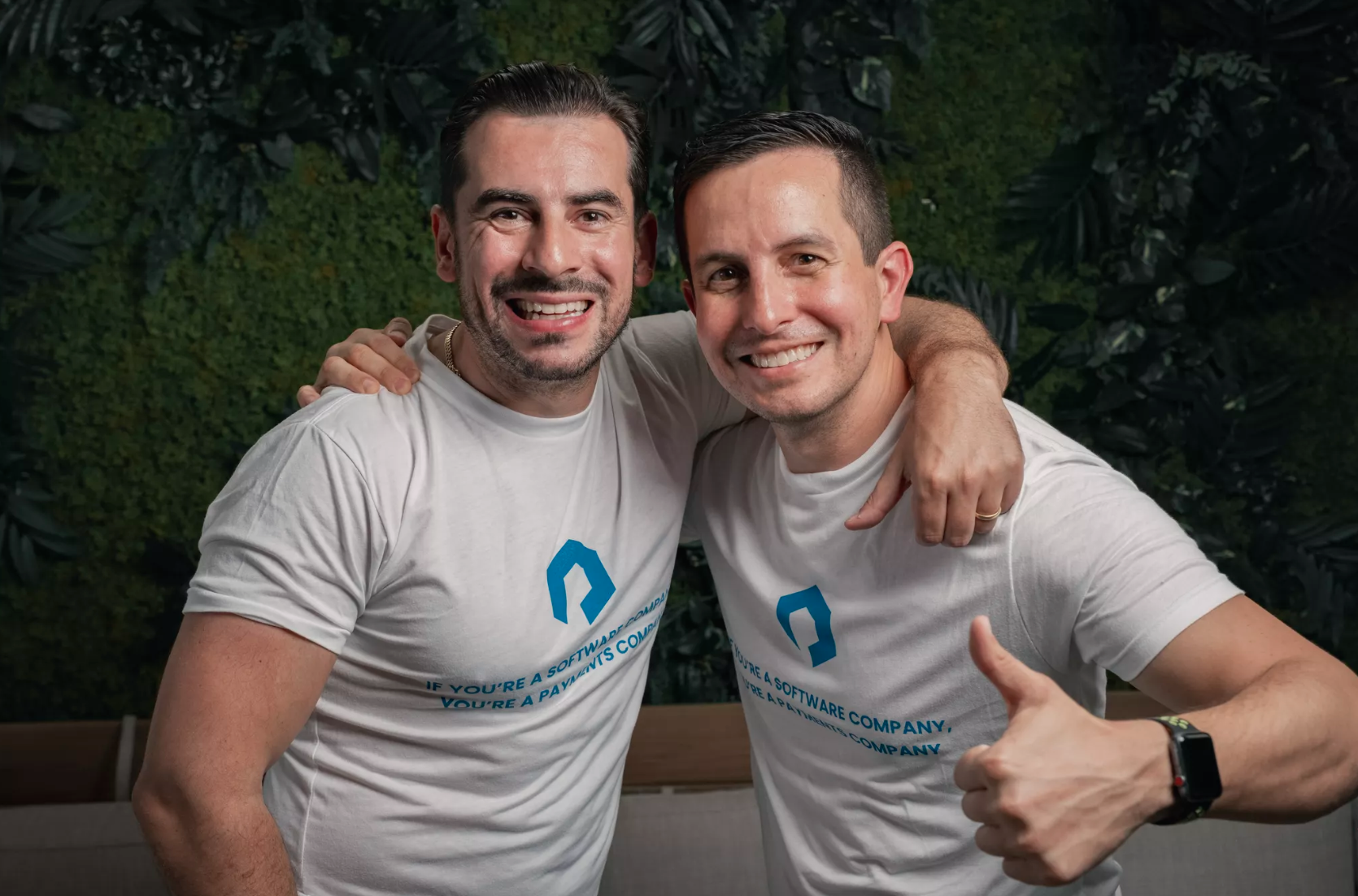
Pictured above: Payabli co-founders Joseph Elias Phillips, at left, and William Corbera.
READ MORE IN REFRESH MIAMI:
- Payabli’s fintech story began in a Miami salsa club
- Payabli raises $28M to turn software companies into payments powerhouses
- Fast payroll across borders? Ontop thinks it shouldn’t be rare
- Quash has raised $7 million to help credit unions stop flying blind
- Meet Remitee, the fintech turning remittances into embeddable infrastructure

- Can Bitcoin solve the broken homebuying math? Milo thinks it can - October 6, 2026
- Emma Harris’ second act is off the wall - October 5, 2026
- doxx.net raises $38M to put AI agents on a shorter leash - October 1, 2026