


British Consul General Rufus Drabble on how Florida and the UK are strengthening ties across space tech, fintech, and beyond
As Miami continues to rise as a global innovation hub, it’s not just Latin America and Europe watching closely. The United Kingdom is, too. Over the last two years, the UK and Florida have built a growing trade and innovation bridge, spanning sectors from aerospace and life sciences to fintech and AI.
At the center of that effort is Rufus Drabble, the British Consul General for Florida, Puerto Rico, and the U.S. Virgin Islands. Based in Miami, Drabble plays a key role in deepening commercial and cultural ties between the two regions. In this conversation with Refresh Miami, he shared how the partnership began, why collaboration between Miami and the UK’s innovation ecosystems is accelerating, and what opportunities exist for startups and investors on both sides of the Atlantic.
This interview has been condensed and edited for clarity.

Refresh Miami: Can you start by giving us an overview of the UK–Florida trade relationship and how innovation fits into it?
Rufus Drabble: Eighty percent of what I do revolves around growth: trade, business, and innovation. That’s where the biggest opportunities are. If Florida were a country, it would now rank as the fourteenth largest economy in the world, and the UK sits at sixth. There’s a lot of synergy there, and plenty of room to collaborate.
Almost exactly two years ago, Governor DeSantis and representatives of the UK government signed a trade Memorandum of Understanding (MOU). Since a federal free trade agreement between the US and UK wasn’t moving forward, we decided to work directly with key states that align with our strengths. Florida was one of them.
Through the MOU, we focused on four core areas:
1. Space and aviation. These sectors share overlapping technologies and supply chains.
2. Life sciences and medtech. Florida’s strong healthcare base meets the UK’s research and innovation capabilities.
3. Advanced technologies like AI and quantum computing. These cut across every industry, from defense to healthcare.
4. Financial services, especially fintech and insurance. Many of the systems behind everyday payments are powered by UK companies, and British insurance expertise is helping Florida tackle complex coastal risk models.
These areas were chosen because both sides saw clear commercial potential and a shared appetite to innovate.
What unique strengths does the UK bring to partnerships with Miami and the broader Florida innovation community?
Miami and London have more in common than most people think. They’re both multicultural, entrepreneurial, and globally connected. They both struggle with traffic, too, but that’s another story.
The shared language, historical ties, and cultural connections make collaboration much easier. And the relationship goes beyond Miami–London. We’re seeing British companies set up in Tampa, Jacksonville, Orlando, and across the Space Coast. Similarly, in the UK, innovation hubs are spread beyond London – places like Scotland, Wales, and the Midlands lead in space, AI, and advanced manufacturing.
So this is a statewide partnership, not just city-to-city. The UK brings deep expertise in regulated industries like finance and healthcare, strong research institutions, and a global network that helps Florida companies scale into Europe and beyond.
You mentioned space and aviation as a key focus. Why has that become such a central pillar of collaboration?
Florida’s space economy is booming. The UK wanted to be part of that, and not just through large corporations but also through smaller, specialized suppliers who can bring niche capabilities.
The UK space sector was worth around £18.6 billion ($24 billion) in 2023, and American firms are increasingly turning to British partners to fill supply chain gaps. Companies like Blue Origin and SpaceX are scaling up rapidly, which means they need reliable, innovative suppliers. And they know British firms can deliver without the security concerns that come with other markets.
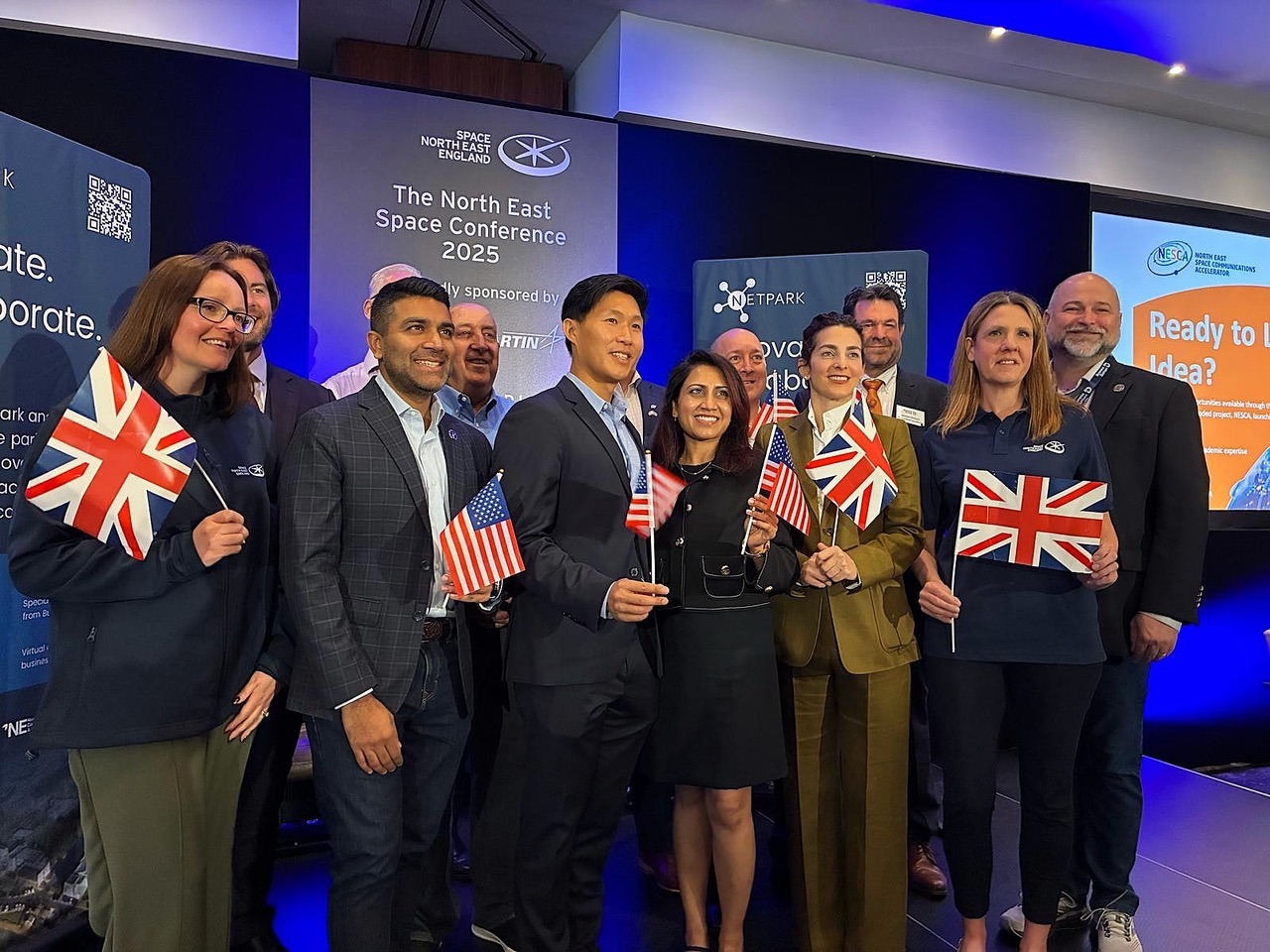
There’s a lot happening on the ground, too. When we signed the MOU, we quickly followed up with a series of trade missions. We brought about 20 UK space companies to Florida, many at post-seed or early growth stage, to meet partners in Orlando, Jacksonville, and along the Space Coast. We call it “organized serendipity,” putting the right people in the right room at the right time and letting the ideas flow.
That led to return visits. We’ve now hosted Florida delegations in the UK to explore our 15 “space clusters,” including Harwell Space Cluster near Oxford – home to over 100 companies, reportedly more than France and Germany combined. This ecosystem model has proven powerful for collaboration, and it’s inspired Florida companies to build similar networks here.
What’s coming next for this collaboration?
In late January, Florida will host a major week of space conferences in Orlando, and we’ll be bringing another group of British companies to join. One highlight is Seraphim, a major UK-based space tech investor with billions under management, which is planning new investments in Florida startups.
It’s an exciting moment. Florida went from roughly 20 launches a few years ago to around 90 last year, and it’s on track to hit 150. The pace is incredible. Space launches are starting to feel like Uber rides – routine but essential. We see this as a massive economic opportunity, not just for the US and UK, but for the broader global space economy.
For Florida startups thinking about expanding to the UK, what should they know?
First, know that we’re here to help. Through the British Consulate and our trade teams, we can connect companies to local partners, accelerators, and investors across the UK’s innovation network.
The UK has an advantage when it comes to accessibility. Our clusters bring together startups, corporates, and researchers in one place. That means faster deal flow, shared infrastructure, and stronger collaboration. We’ve also seen many US companies establish supply chain outposts in the UK because it offers proximity to the European market while maintaining a stable legal and financial system.
There’s also genuine openness to Florida businesses. We recognize the momentum coming out of Miami and Orlando, and we want to make that transatlantic bridge as seamless as possible.
What are the biggest bottlenecks preventing companies from scaling across borders?
Visas are still a challenge. This is a federal issue decided in Washington, so it’s often out of our hands. But it can make it hard for companies to move specialized talent, whether it’s an AI researcher from Cambridge or a materials scientist from Glasgow.
We’re working closely with Florida’s Department of Commerce and Department of Transportation, both of which have been fantastic partners in helping us navigate these issues creatively. Florida is one of the few states that treats the space industry as part of transportation, which shows how forward-thinking their leadership is.
On both sides, we’re finding solutions to support talent mobility and strengthen supply chains. And with investors like Seraphim entering the market, we expect more UK–Florida partnerships to form in 2025 and beyond.
Finally, what message would you like to share with Miami’s startup and tech community about the UK’s presence in Florida?
This isn’t about selling British products in Florida. It’s about building something together. The problems we’re trying to solve – from space travel to climate resilience – are too big for one market or one mindset.
When you bring British and Floridian innovators together, something powerful happens. It’s a rising-tide effect. A lot of breakthroughs come from unexpected collaboration, someone solving a problem you didn’t even realize existed.
A few months ago, I met an engineer working on how to make concrete from moon dust. He was using a standard UK-made microwave as part of his experiment. It’s small examples like that that remind you how interconnected innovation really is.
So my message is simple: if you’re a Florida startup with global ambitions, come talk to us. Whether it’s through trade missions, research ties, or investment, the UK is eager to collaborate. We’ll help you join the dots and find the right partners.

READ MORE IN REFRESH MIAMI:
- Reimagining Urban Spaces: Global voices converge at Smart City Expo Miami
- NSU names next leader of the Levan Center of Innovation
- Connectd’s Roei Samuel sees the future of work coming faster than expected, and he’s building the platform to meet it
- Approaching 40th anniversary, the Research Park at FAU drives innovation across South Florida

- Dapta raises $6M to give Main Street businesses an AI advantage - October 13, 2026
- David Blumberg on why Miami’s tech moment is still gaining ground - October 13, 2026
- This Miami startup thinks your home should have a signature scent - October 12, 2026