



Most of us don’t think twice about the antennas that beam WiFi into our homes. But for satellites orbiting hundreds of miles above Earth, antennas are still treated as one-off, custom projects. Dante Colantonio wants to change that.
The Argentine engineer has spent two decades in the satellite industry, and now, from his new base in Boca Raton, he’s chasing a simple but ambitious goal: take something notoriously complex – space antennas – and make them standardized, reliable, and quicker to deploy.
“The idea is to deliver quality elements, but at the same time reduce lead times with designs that allow automation,” Colantonio, founder and CEO of Standard Space Antennas, told Refresh Miami.
This push for standardization comes at a moment Colantonio sees as pivotal. “I’ve never seen the industry more explosive,” he said. He pointed to the rapid expansion of commercial activity in low-Earth orbit and the infrastructure being built to support it.
After years of working in Argentina on smaller scientific and Earth-observation missions, he felt the time was right to launch Standard Space Antennas as a fully American startup with its own business plan. Far from being a branch or sales office, the company is a new venture designed to compete at the state of the art and maximize innovation from U.S. soil.
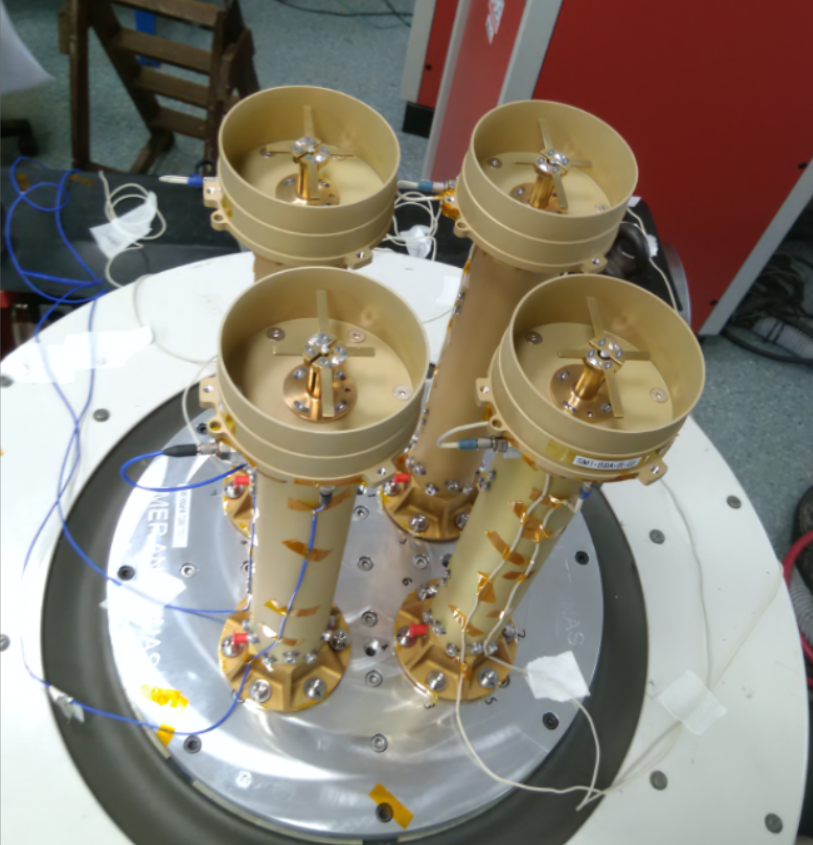
Standard Space Antennas already has a consolidated client and is beginning a broader sales campaign. “We’re selling, and that allows us to finance the riskier R&D projects,” Colantonio said. Some of those products have flown in multiple missions, hitting the highest level of technical readiness. Others are still in development, such as ultra-light deployable antennas and new materials that could redefine how satellites operate.
Colantonio noted that the company has to be selective about how it presents itself. “In this industry, if something is poorly presented, a prime contractor may remove you from their list immediately,” he said. “It’s very technical buyers, so we need to show real products, real tests, real photos.”
Why Boca Raton? Colantonio and his small team [pictured above] weighed options across the U.S., including Austin and Colorado, before landing in South Florida. Boca offered more than palm trees: it had the University Research Park, proximity to engineering talent, and a growing aerospace ecosystem.
“We wanted to avoid being isolated in just an office space,” he said. “Here we can connect with universities, the community, and investors. And of course, the quality of life also matters.” He added his gratitude to Ryan Lilly and Andrew Duffell from Global Ventures at FAU’s Research Park for welcoming the company and creating an environment where Standard Space Antennas can expand and develop its technology.
So far, the company is bootstrapped, reinvesting revenue from sales into growth. But Colantonio is preparing for outside investment. He sees a gap in the U.S. market, where some antenna-focused companies were absorbed by larger satellite builders, leaving room for a specialized player.
“I feel like this is the right time to come back strong,” he said. “We can really lead in this niche.”
Looking ahead, Colantonio has his sights set on something even bigger: applying space antenna technologies to everyday life. He imagines wireless energy transfer – charging devices at a distance – or systems that could support smart cities and electric mobility.
“These are ideas that have been around since NASA’s early days, but they stalled because there weren’t clear business steps,” Colantonio asserted. “Now I think we can start climbing those steps.”
READ MORE IN REFRESH MIAMI:
- From Miami to Mars, Mission Space is safeguarding life on Earth and beyond
- For Urban Vision 3D’s smart city technology, not even the sky’s the limit
- FAU Engineering among 8 universities nationwide selected by NASA for nanosatellite program
- Pioneering the future of geospatial intelligence from Miami to outer space with Space-Eyes
- With new office, Guident zooms into the future of autonomous driving

- Dapta raises $6M to give Main Street businesses an AI advantage - October 13, 2026
- David Blumberg on why Miami’s tech moment is still gaining ground - October 13, 2026
- This Miami startup thinks your home should have a signature scent - October 12, 2026