


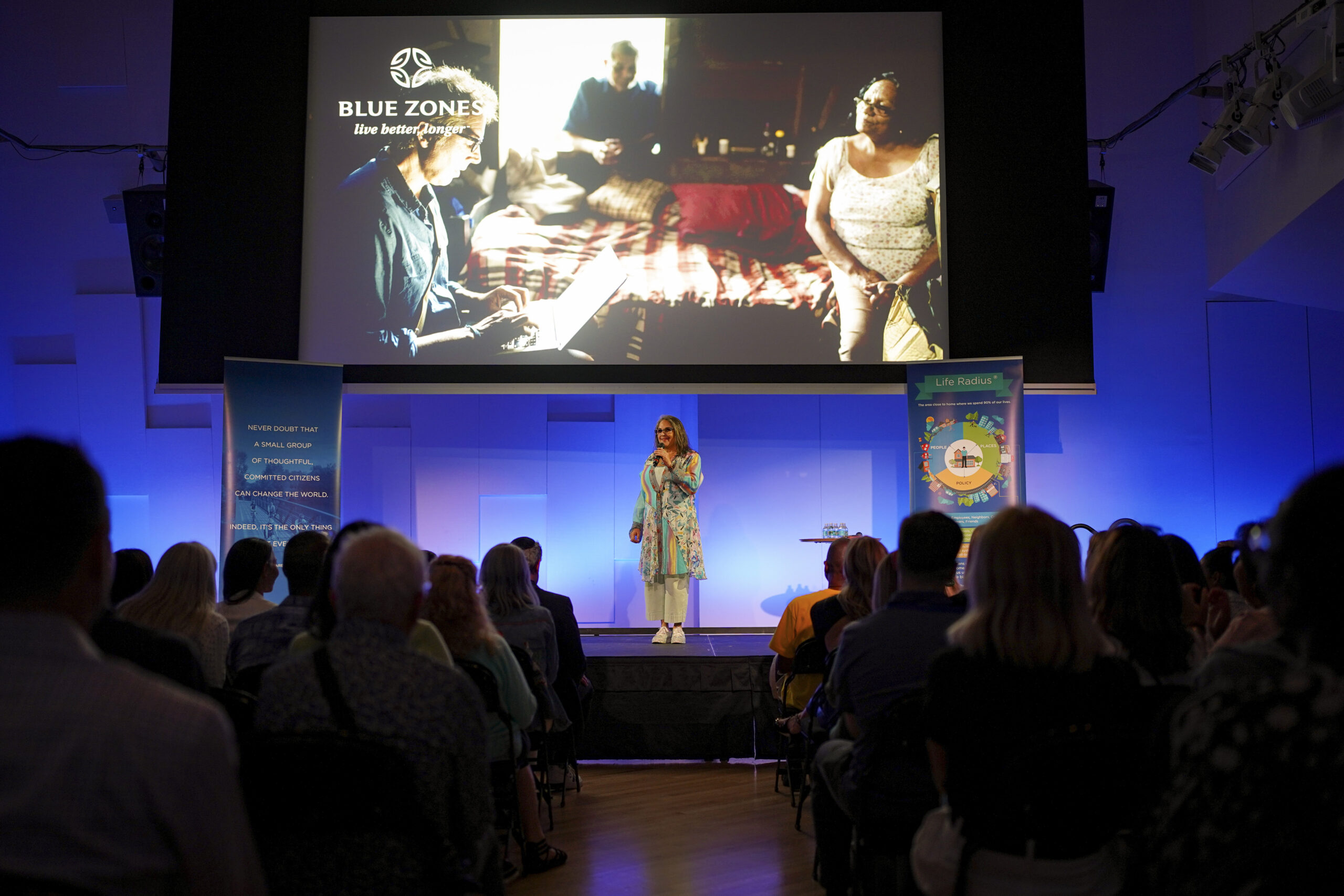
Miami Beach Commissioner Tanya Bhatt wants to make her city a Blue Zones Project, which is a community well-being improvement initiative. “Blue Zones are all about however many years you have, to make sure you live them as well as you can,” she said. “Living better, living longer, living a more connected life with purpose.”
A six-month feasibility study was completed this year in Miami Beach, where hundreds of residents learned about Blue Zones and contributed their opinions on how to make the city healthier and happier for residents. There are ninety cities in the US listed as “Blue Zones Project” communities, including Jacksonville, FL. “It can be anything from increasing park space to micro mobility access and starting community walking groups,” said Commissioner Bhatt.
Some of the tech that Blue Zones use include digital dashboards to track community health metrics and policy progress; Gallup measurements of Blue Zones annual “Well-Being Index” surveys; community websites that connect residents with in-person events, like walking groups, purpose workshops and volunteer opportunities; and public screenings of the Netflix docu-series on Blue Zones (Live to 100: Secrets of the Blue Zones). They also helped create an online farmers market that connects the community with local farmers.
The Blue Zones Challenge App, which is free for all residents in Blue Zones Project communities, helps people track their daily and weekly habits to develop a healthy lifestyle. Blue Zones Connect, which is set to launch next year as a social networking site for certain Blue Zones communities, aims to create virtual and in-person connections between people who live near each other.
National Geographic explorer and journalist Dan Buettner helped come up with the term “Blue Zones” during an exploratory project over 20 years ago while investigating regions of the world with the highest longevity. The concept of Blue Zones stemmed from the work of Italian researcher Gianni Pes and demographer Michel Poulain, in which they identified Sardinia, Italy, as the region with the highest number of male centenarians.
On their map, they drew blue circles around villages with the highest longevity and called the area inside of the circle the blue zone. Buettner’s son, Dan Buettner Jr., a former firefighter, is trying to help cities around the world, including Miami Beach, become blue zones. “The model is predicated on looking beyond just the individual and looking at their environment,” he said of the initiative. “We try to engage a critical mass of restaurant owners, schools, and places of worship to make tweaks to their business, congregation or school to make the healthy choice the easy choice,” he added.
About making Miami Beach a Blue Zones Project, Commissioner Bhatt adds: “This is something I believe in really strongly because we’re such a great place to live already and we’re so close to maximizing our potential and this is a way to help us get there.”
Pictured above: Miami Beach Commissioner Tanya Bhatt addresses a community meeting in Miami Beach about the Blue Zones Project.
READ MORE IN REFRESH MIAMI:
- Art meets tech: 6 ways to experience both during Miami Art Week
- Waymo brings fully autonomous driving to Miami
- 3 startups win innovation challenge to help cut landfill waste in Miami-Dade
