


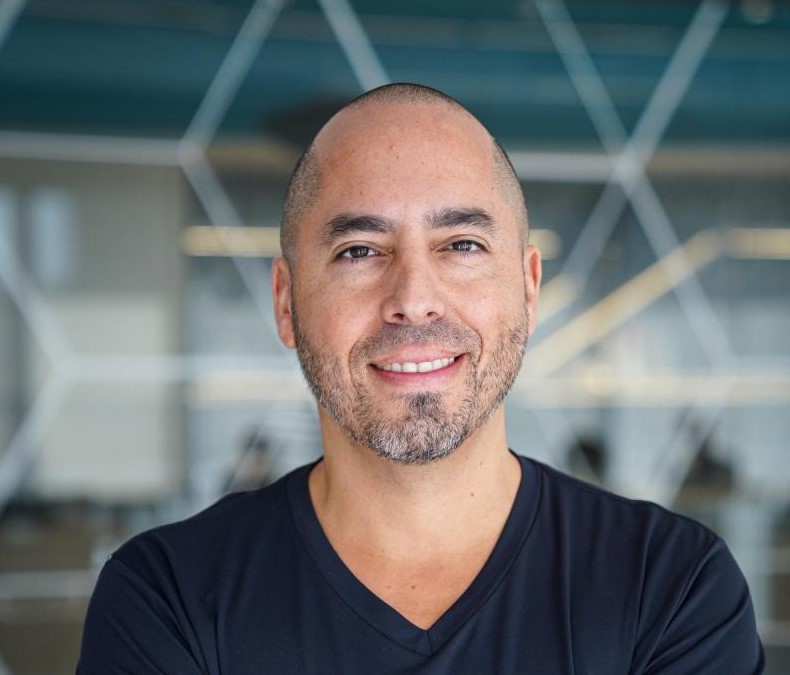
Rodrigo Teijeiro maps RecargaPay’s journey, the unique opportunities in LatAm fintech, and his thoughts on building a global business from Miami
By Riley Kaminer
Rodrigo Teijeiro, founder and CEO of RecargaPay, has navigated two decades in fintech to build RecargaPay into one of Brazil’s leading payment platforms.
RecargaPay has transformed how Brazilians handle their finances, from basic bill payments to complex buy-now-pay-later (BNPL) purchases – a service used by around 80% of Brazilian credit card holders.
In 2023, the company reached over $200 million in revenue, marking 55% year-over-year growth and projecting similar gains for 2024. RecargaPay has been profitable, with positive cash flow, since 2022. The fully remote team of 600 employees supports RecargaPay’s over 9 million clients. The company has raised $152 million in total funding, including from Miami investors IDC Ventures, Fuel Venture Capital, TheVentureCity, and serial entrepreneur Martin Varsavsky.
We sat down with Teijeiro to discuss RecargaPay’s growth story, the landscape of fintech in Brazil, and his advice for Miami’s budding tech entrepreneurs.
This interview has been condensed and edited for clarity.
Refresh Miami: Tell us about RecargaPay’s journey. What inspired you to create this platform?
Rodrigo Teijeiro: I’ve been in this industry for over 20 years, but RecargaPay’s journey really started back in 2010. At the time, we ran one of the largest social networks in Latin America and a calling card business. While both were profitable, they were limited in terms of growth. We wanted to tackle a problem that wasn’t yet being solved. With 600 million people in Latin America and over 80% of phone users on prepaid plans, we saw an opportunity in mobile top-ups. People were still standing in line to buy credit, even though it was a digital service.
We launched RecargaPay as a way to let users recharge their phones from home. Soon, we realized that the demand was there not only for mobile top-ups but for broader payment options. By 2015, we had expanded across multiple countries, but I decided to double down on Brazil. Today, we’re a one-stop financial platform where users can deposit money, earn interest, pay bills, get loans, and even access microloans – all within the app.
Why did you decide to focus on Brazil?
To build a major business in Latin America, you need a strong presence in Brazil. Many entrepreneurs make the mistake of starting in smaller markets like Argentina or Colombia, then trying to enter Brazil later. I noticed some companies that succeeded by focusing on Brazil early on, so I decided to follow that model. It’s the most complex and competitive market in Latin America but also the one with the largest potential.
Could you explain the concept of a ‘super app’ and why it’s relevant for RecargaPay?
In the U.S., apps tend to focus on one or two functions, like Venmo for payments or Twitter for messaging. But in countries like Brazil, users value a more comprehensive app experience. A super app bundles many services, which adds value for users and increases engagement. With RecargaPay, we’ve created an app where users can perform a wide variety of financial tasks– from recharging their phones to paying any bill, to sending money via Pix, Brazil’s fast payment system. This all-in-one experience is what I believe will set RecargaPay apart in the long run.
What makes the Brazilian fintech sector unique, and what can we as non-Brazilians learn from it?
Brazil has become a leader in digital payments, thanks in large part to Pix, an instant payment system introduced by the Central Bank of Brazil. Pix allows people to transfer money instantly at no cost, which has driven widespread adoption and made Brazil a model for other countries. Coupled with open finance, it’s created more competition and lowered costs for consumers. Other countries can learn from how Brazil’s central bank has pushed for interoperability and low-cost transactions. The success of Pix shows the potential of fintech to create a more inclusive financial ecosystem.
You’ve been in Miami for eight years now. How does Miami compare as a hub for building a company?
I moved to Miami from Argentina, and it was a very intentional choice. For one, the time zone makes it easier to manage remote work across Latin America. Miami International Airport’s direct flights to Latin America and Europe are also a huge plus. And back then, Miami was much more affordable than New York or San Francisco, which was important as I was raising two kids. Plus, Miami is a cosmopolitan city with a large Latin American population, making it an ideal landing spot.
The city has changed a lot over the last eight years. Back then, people thought moving here meant I was ‘retiring’ or looking to party. Today, Miami is recognized as a tech hub. COVID and the rise of remote work brought a wave of talent and companies here. Now, there are CEOs and C-level executives running successful companies from here, particularly in Key Biscayne, where I live.
What advice would you give to Miami’s up-and-coming entrepreneurs?
First, build something you truly believe in because this path isn’t easy. Find product-market fit and work toward profitability early on. Today, it’s cheaper than ever to start a business – cloud services, AI, and open-source tools have made it possible to build fast with fewer resources. Aim for profitability so you have leverage in funding conversations. It’s not necessary to raise huge amounts of capital to prove your model; instead, focus on getting traction with the resources you already have. That will position you well for growth, whether you’re in Miami or anywhere else.
Lastly, what’s next for RecargaPay?
We started with mobile top-ups, and now those transactions are a tiny fraction of our payment volume. Pix has transformed our business, with over 80% of our transactions going through Pix today. We’re just starting with open finance and credit products, so there’s significant room to grow. Ultimately, our goal is to be a comprehensive financial solution for both consumers and merchants. We’re building a platform where users can do everything – from depositing funds to accessing loans and paying bills – all in one place. With advancements in machine learning and AI, we’re just getting started.

READ MORE IN REFRESH MIAMI:
- British fintech Floww expands to the U.S. via Miami to transform capital raising for startups
- Why this Canadian fintech leader is making Miami its new home base
- Global fintech Veritran opens North American HQ in Coral Gables
- From Brazil to Boca, Pappsales is transforming CRM for small businesses globally
- Approaching 40th anniversary, the Research Park at FAU drives innovation across South Florida

- Dapta raises $6M to give Main Street businesses an AI advantage - October 13, 2026
- David Blumberg on why Miami’s tech moment is still gaining ground - October 13, 2026
- This Miami startup thinks your home should have a signature scent - October 12, 2026