



Local founders share their plans, lessons, and advice for building stronger businesses and a thriving startup ecosystem in the year ahead
By Riley Kaminer and Nancy Dahlberg
With 2024 now in the rearview mirror, what will 2025 look like for startups in our ecosystem?
Local founders are brimming with ideas for what’s next. From scaling responsibly to leading transformative innovations, #MiamiTech innovators are preparing to step into 2025 with clear focus and determination.
Across industries, a few themes stood out: disciplined execution, adaptability, and a commitment to collaboration. Here’s a look at how these founders are gearing up for success in the new year.
Scaling with purpose
Growth is a universal goal for startups, but the approach is changing. Founders are steering away from old playbooks focused solely on rapid expansion, instead prioritizing strategies that balance scale with stability.
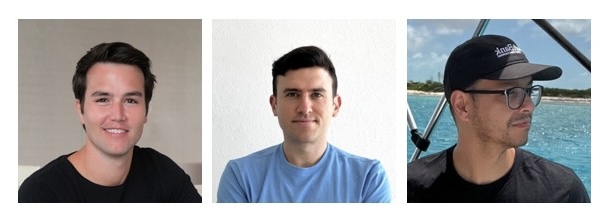
Peter Spradling of LatAm trade financing platform Marco believes sustainable growth starts with the fundamentals. “Success isn’t about chasing every idea or trend – it’s about staying disciplined and doubling down on what works.” This disciplined approach reflects a shift from growth-at-all-costs to one centered on profitability and measurable impact.
Ramiro Roballos of Tukki.ai, a startup that helps U.S. immigrants file their legal paperwork, echoed this sentiment, emphasizing that “solid unit economics are now key to success.” Founders are increasingly laser-focused on creating lasting value for their customers, not just following fleeting market trends.
Auston Bunsen, the Quicknode co-founder and Miami tech OG who is now building the API-focused AccessGrid.com, says it all starts with acquiring that first customer “that absolutely loves your product” and then adding them one by one until you have a validated product and can start scaling. “Customer validation is the best way to deliver products that generate massive usage.”
Building resilience through adaptability
The unpredictable nature of 2024 served as a reminder for many founders: adaptability isn’t optional – it’s essential.
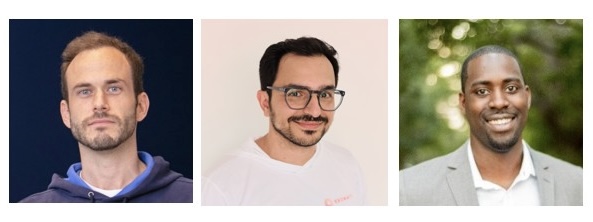
Healthcare payment platform Osigu founder Fernando Botrán highlighted two pivotal achievements this year: a strategic partnership with Visa and their expansion into Brazil. Both milestones underscored the importance of being agile and embracing change. “Building strong partnerships and evolving our strategy were critical for driving innovation and achieving our goals,” he said.
For Hannan Parvizian of renewable energy startup Exowatt, rising demand for sustainable energy solutions was a wake-up call to scale faster. “The realization made it clear that we need to deploy and scale our product even faster than originally planned,” he explained. Parvizian’s team plans to tackle the environmental impact of AI-powered data centers – proving that South Florida companies can address global challenges while thriving locally.
Timothy Keith of Propense.ai, an AI-powered cross-selling platform, said the most important skill is the ability to adapt quickly while staying focused. “I hadn’t previously realized that adaptability is a skill in itself — one that not only grows with practice but also has a network effect, strengthening a team as a unified whole. This is now a key core value that we consistently share at Propense.”
Collaboration as a catalyst
Another recurring theme was the role of collaboration in amplifying success. Whether through partnerships, mentorship, or shared resources, founders are leaning on their networks more than ever. However, says Keith, “build genuine relationships and stay connected to your mission.”
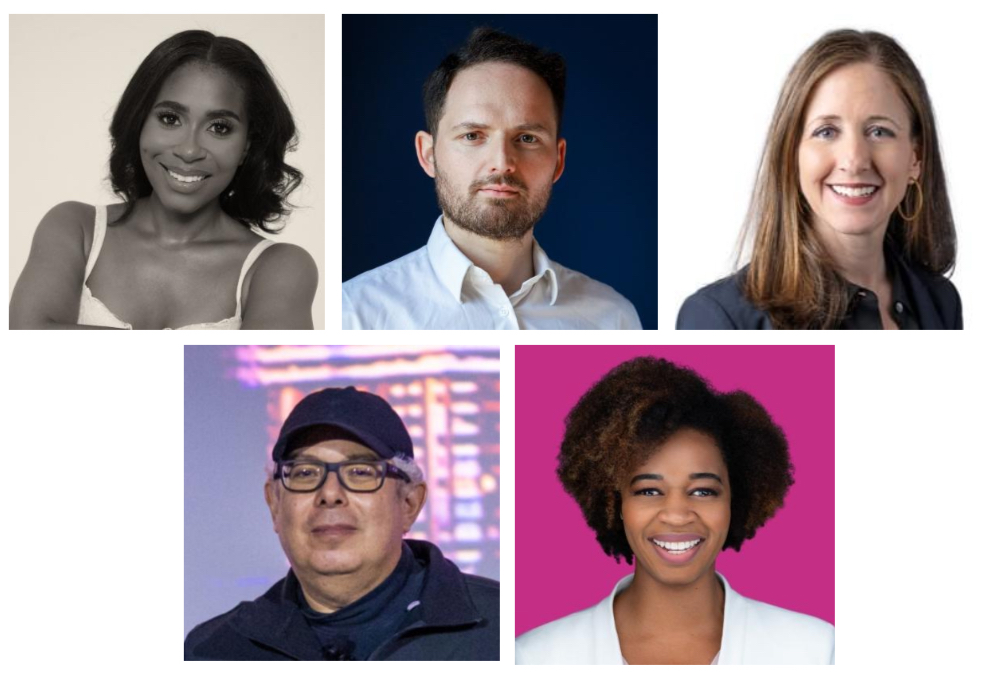
Chrissybil Boulin of Vero Learning, a career guidance and talent optimization platform, found partnerships and feedback data to be critical to moving forward. “Collaborations with non-profits onboarded thousands of users, and Office Depot validated our AI in job matching and mitigating churn,” she said, demonstrating the value of recognizing overlooked talent.
For Michael Cassau of business acquisition platform SKROL, collaboration is critical for ensuring smooth business transitions during acquisitions. His advice? “Launch quickly, iterate faster, and stay adaptable.”
Meanwhile, Nicoletta Tessler of teen mental health platform BeMe Health is optimistic about 2025 as a turning point for youth mental health. She hopes for a cross-sector push involving “sports teams, health plans, schools, and government entities” to build the resources young people urgently need.
A bullish bunch about South Florida, too
Rony Abovitz, now building SynthBee and formerly of Mako Surgical and Magic Leap, has always been bullish on South Florida as a place for innovation. “My hope is to build SynthBee into one of the most innovative and impactful companies in the world, with our headquarters here in South Florida. We are in the broad sector of computing intelligence, but we are not following in the footsteps of what is currently known as Big AI. We are creating CI, Collaborative Intelligence – a new way forward for people and computing to build great things together.”
Founders also see Miami as a unique hub connecting the U.S., Latin America, and beyond. “Miami is cementing its status as a hub for transformative industries,” said Botrán. Parvizian shared a similar sentiment, emphasizing that South Florida can lead the way on big global issues while building world-class teams locally.
The arrival of more major capital providers, as Cassau observed, will further enhance funding opportunities for entrepreneurs and fuel innovation across sectors.
Still, said Bunsen, “We must find a way to band together and push the entire ecosystem forward, connecting developers with employers and each other, fostering a culture of building more than products.”
Lessons to carry into 2025
What emerges from these founder conversations is a clear vision for the future: innovation, execution, adaptability, and collaboration are the pillars of success. Whether innovating with AI, solving environmental problems, revolutionizing healthcare, or empowering underserved communities, South Florida founders are committed to making a tangible impact.
For Aurelia Edwards of Nailstry, a creator of virtual measurement technologies for the beauty industry, “2024 taught us that real growth happens outside your comfort zone. Trying new markets and taking risks pushed us to think differently and opened doors we didn’t even know were there.” Tackling the Japanese market is a 2025 goal for Nailstry.
Added Abovitz, stay true to your vision. “There will be many obstacles and challenges in your path – but do not give up. Have the grit and courage to lead and endure.”
Perhaps Tessler put it best: success comes down to prioritizing execution and lifting others along the way. “The more we give support to other founders – the more successful we will become.”
With a dynamic ecosystem, global reach, and a collaborative spirit, South Florida is ready to make its mark in 2025.
So what does the future hold for #MiamiTech? It’s about what this community is building together.
READ MORE IN REFRESH MIAMI:
- Special report: Cheers to #MiamiTech 2024: A global ranking, healthtech and proptech rising, megarounds, new funds, a climatetech hub & more
- Special report: Miami VCs share what they’re focusing on in 2025
- Rewind: #MiamiTech founders ushered in 2024 with these predictions and resolutions
- Marco lands $12M Series A to further develop solutions for LatAm’s SME exporters March 19, 2024
- Tukki takes the headaches out of U.S. visa applications
- Osigu closes initial tranche of $25M Series B, partners with Visa to transform healthcare payments across Latin America
- The hottest technology in Miami? Exowatt raises $20M, launches renewable energy solution
- SKROL closes $1.2M, launches business acquisition platform to pioneer the tech-powered future of SMBs
- BeMe Health secures $12.5M to expand teen mental health services
- Propense lands $3M seed to propel AI-powered platform for B2B cross-selling
- Rony Abovitz’s SynthBee raises $20M to build out computing intelligence platform
- She nailed it! Aurelia Edwards makes AI work in the real world

- Joe Russo helped build Palm Beach Tech. Now he’s building from it. - September 14, 2026
- Koywe’s answer to slow international payments started with a lifelong friendship - September 9, 2026
- Split Pay raises $125M to give your paycheck better timing - September 9, 2026