

At every conference, there’s always one booth with a sad pile of pens, flimsy totes, and stress balls shaped like fruit. You know the one. The kind of merch that makes people quietly wonder why companies still spend money on things destined for the junk drawer.
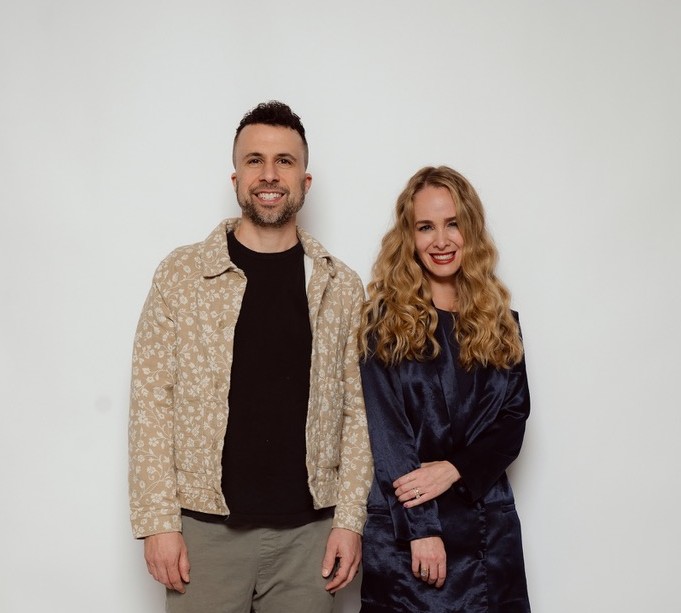
Eric Kami and Stephanie Davis [pictured above] had that same reaction — but they were seeing it from the inside. Before launching Better Swag, the husband-and-wife founders spent years building Tribe Socks, a manufacturing business that printed customized socks for retailers and promotional companies across the country. They attended the big industry trade shows, where the gap between what brands wanted and what the swag world offered was glaring.
“We would see so much stuff that wasn’t memorable,” Kami told Refresh Miami. “The quality wasn’t there.”
Davis saw the same mismatch from a different angle. At Google, she managed overflowing swag closets, wasted budgets, and an endless loop of items no one used.
“It didn’t feel thoughtful,” she said. The lack of coordination across teams led to duplication and unnecessary waste. As a vegetarian who cares about sustainability, she found it hard to ignore how careless the process felt.
So the two decided to build the alternative: a Miami-based merchandising company designed around creativity, quality, and actual usefulness. Better Swag manufactures many of its products themselves, giving them control over materials, fit, and the kind of small details – zippers, drawstring tips, stitching – that make something feel premium rather than perfunctory.
Instead of dropping logos on blank stock shirts, Better Swag creates items that look like genuine brand extensions. Sometimes that means partnering with labels like Patagonia or Carhartt. Other times it means manufacturing something completely custom. The result looks more like fashion than freebies.
The timing worked in their favor. The swag world has been shifting away from bulk giveaways and toward items people genuinely want to wear. Kami said the best examples feel closer to culture than marketing. Think of the viral “thinking” hats at the Claude pop-up in New York: simple, smart, instantly recognizable.
Startups often ask how to create meaningful swag without burning money. Davis’s advice? Use merch to tell a story.
“We combine design, production, and brand thinking,” she said. For companies, Better Swag created caps with the company’s emblem flipped upside down, turning a logo into a conversation starter. The team also helps brands launch stores with no minimums, no monthly fees, and on-demand production so startups don’t have to hold inventory they can’t afford to store.
Better Swag now has about a dozen team members, including former executives from Disney, Kith, HOKA, and Madhappy. Their production and fulfillment partners are based in Miami, which has become an important part of the company’s identity. Davis said the city welcomed them from day one.
“We felt more accepted here than in San Francisco,” she added. That welcome turned into civic involvement: helping Mayor Francis Suarez with the “How Can I Help?” campaign, supporting students through Young Musicians Unite, and contributing to United Hatzalah and Make-A-Wish.
Looking ahead, the founders are focused on tech. They’re rolling out more self-serve company stores so even a 10-person startup can offer branded gear that doesn’t feel cheap. Their Brex partnership now lets companies redeem swag using credit card points. And everything is made on demand, which cuts storage costs and keeps waste at a minimum.
Better Swag’s north star is straightforward: no tchotchkes. If they wouldn’t wear it themselves, they won’t make it.
And it raises a question. If companies stopped treating swag like an afterthought, how much stronger could their brands feel?
Davis and Kami are betting the answer is: a lot.

Better Swag is offering a special deal for the Refresh community. Anyone looking to refresh their swag program can receive a 15% discount when they reach out at swag@betterswag.com before December 1st and mention the code Refresh.
READ MORE IN REFRESH MIAMI:
- Miami becomes home base for Spain’s rising nightlife tech startup
- Letterhead lands $34M to turn email newsletters into a full-scale business engine
- On Florida’s Gold Coast, an accelerator links founders with the state’s power brokers
- A family office’s long view on Miami tech
- FLF appoints Rachael Ferm as Director of Investments, strengthening its community-driven venture model

- Zèya zooms past 100,000 downloads, sets its sights on the next million - September 16, 2026
- Grip is taking the guesswork out of shipping the cold stuff - September 15, 2026
- Joe Russo helped build Palm Beach Tech. Now he’s building from it. - September 14, 2026