


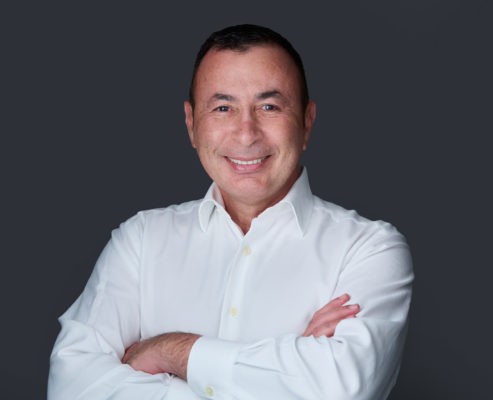
Frank Fawzi doesn’t have a medical degree, but he’s helping doctors sleep better at night. Literally.
The longtime South Florida tech executive and CEO of IntelePeer is betting big on AI tools that lighten the administrative and clinical load for healthcare providers – from handling patient intake and appointment logistics to triaging late-night prescription requests. It’s not a moonshot vision. It’s already in motion.
“We’re not just talking about AI in theory,” Fawzi told Refresh Miami. “We’re rolling out solutions today that take pressure off clinicians and staff. And patients benefit too because they get faster responses and a more personalized experience.”
Based in Dania Beach, IntelePeer has spent the last several years building AI-powered communication tools for major clients in insurance, financial services, and utilities. But healthcare has become its biggest market by far, and the company has leaned into it.
Fawzi pointed out that healthcare represents about 20% of U.S. GDP, with up to 30% of that going toward administrative costs. “That’s where we saw the opening: How do we reduce that 25 to 30% drag?” he said.
The latest move: a partnership with another South Florida company, SOAP Health, headquartered in Boca Raton. That alliance is helping IntelePeer move from just handling scheduling and billing into more advanced clinical territory. Together, they’re testing use cases like after-hours triage, digital intake forms that summarize symptoms, and even AI-generated diagnostic suggestions that serve as a second opinion.
“Think about when a doctor gets called at 9 p.m. for a prescription refill,” Fawzi said. “That’s something AI can easily handle, freeing up the doctor’s time for real medical care.”
The firm recently launched its SmartAnalytics platform to record, transcribe, and learn from every patient interaction. “If a mom always books her kids’ appointments in the mornings, we can recognize that pattern and suggest time slots accordingly,” Fawzi said.
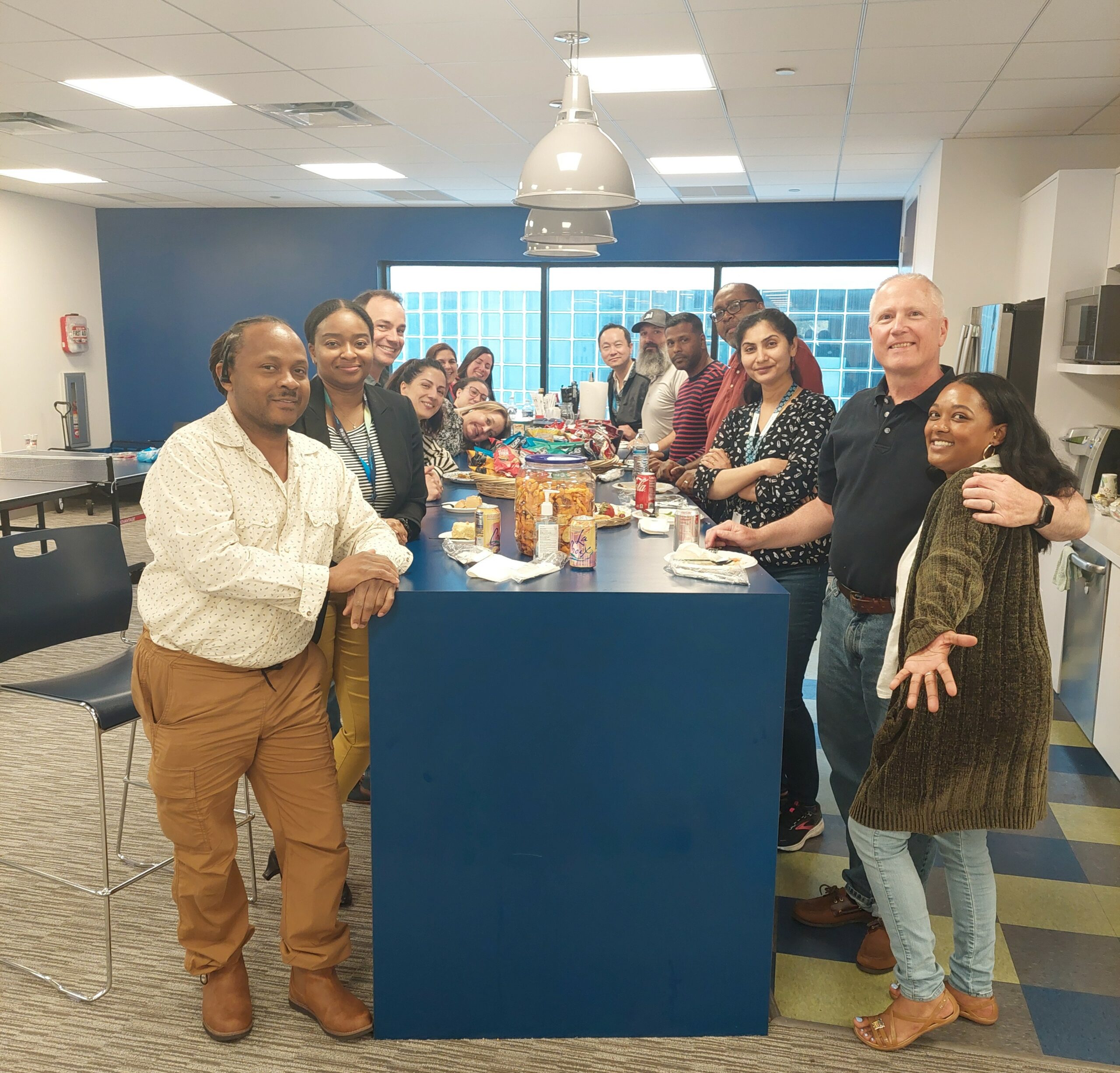
IntelePeer’s growth reflects the momentum. Annual recurring revenue jumped 37% in both Q1 and Q2 of this year, and the company now employs over 300 people, with 60 based in South Florida [pictured at the top of this post are some of the local team members].
The company is also expanding beyond U.S. borders. “Right now, we’re mostly North America-based in terms of sales,” Fawzi said. “But we’re looking at acquisitions abroad to support international growth over the next few years.”
Even with big ambitions, he’s still bullish on his own backyard. “Some people who moved here during COVID are digging in and building,” he said. “South Florida is stabilizing, and for companies like ours, it’s a strong talent base to build from.”
The AI race may be accelerating, but Fawzi isn’t looking to chase headlines. He’s focused on building tools that actually work: systems that relieve overworked health professionals, make sense of messy call center logs, and even prevent fraud in credit unions.
Still, he knows they’re just getting started. “We’ve been early adopters, but we’re only scratching the surface,” he said. “Ten years from now, the impact of AI on healthcare – and on our company – is going to be night and day.”
READ MORE IN REFRESH MIAMI:
- Health Advocates Network of Boca raises $15.6M in debt and equity funding
- Thema’s pathway to brain health: Prevention, early detection and healthcare access
- Boca-based healthtech Dazos raises $25M Series A
- With $10M in tow, Kiwi takes on Latin America’s $60 billion healthcare gap
- Blockchain Rx! Solum Global’s cure for healthcare’s payment headaches

- Terminal acquires Miami AI startup Stationed, plans to double team in Wynwood - October 22, 2026
- Vylit is giving creators a new way to find their fans - October 21, 2026
- Q Intelligence is taking a swing at Hollywood’s money problem - October 21, 2026