



By Riley Kaminer
When Kieren James-Lubin was working on his PhD in mathematical physics at Berkeley, his dad Joseph Lubin shared a draft of something he was working on. That document? The Ethereum white paper. James-Lubin worked on various parts of the protocol alongside his father, who would go on to found blockchain software company ConsenSys, and Vitalik Buterin.
“In that process, I realized there was something there,” James-Lubin told Refresh Miami. At first, he worked on “this Ethereum thing” (as he then called it) alongside his PhD work. “But very quickly, the blockchain world started consuming all my time, and it became impossible to think about anything else,” James-Lubin said.
There was one very useful aspect to his time at Berkeley, however: it was really the launchpad for him to explore the blockchain through his own venture, BlockApps. In 2015, he teamed up with co-founders Jim Hormuzdiar and Victor Wong to launch the company, which aims to make markets more efficient through blockchain technology.
From its inception, BlockApps was driven by a pragmatic approach to blockchain technology. James-Lubin and his team sought to demystify and simplify blockchain access through an API, making it accessible not just to enthusiasts but to businesses eager to harness its potential. Through hackathons and collaborations, they focused on attracting the right talent interested in building practical applications of blockchain.
BlockApps stands out for its focus on real-world assets. From metals to collectibles and carbon offsets, the company enables the digitization and trade of physical goods. This approach not only opens up new markets but also lowers barriers to entry, allowing for the fractionalization of assets and expanding access to a wider audience.
At its core, BlockApps operates on a transactional model, fostering a blockchain network and marketplace where sellers can connect with new buyers without upfront risks. This model has not only fueled the company’s growth – around 4x quarter over quarter – but also attracted significant investment, with the company having raised a $41 million Series B in 2022.
James-Lubin relocated to Miami amid the pandemic two and a half years ago. Drawn by our city’s burgeoning tech scene, openness, and optimism, he sees Miami as ripe with potential for growth and innovation. James-Lubin explained that the city’s tech-friendly environment contrasts with the “sleepy incumbent” vibe of his hometown of New York, while offering a unique blend of lifestyle and professional opportunities that James-Lubin is eager to tap into. Currently, two of BlockApps’ 35 full-time employees are based in South Florida.
Looking forward, BlockApps is poised to expand its marketplace into new verticals and products: “Our aim is to make new liquid trading markets where they didn’t exist before,” said James-Lubin. “We haven’t really seen or imagined everything that can happen with property. That’s what makes me very excited.”
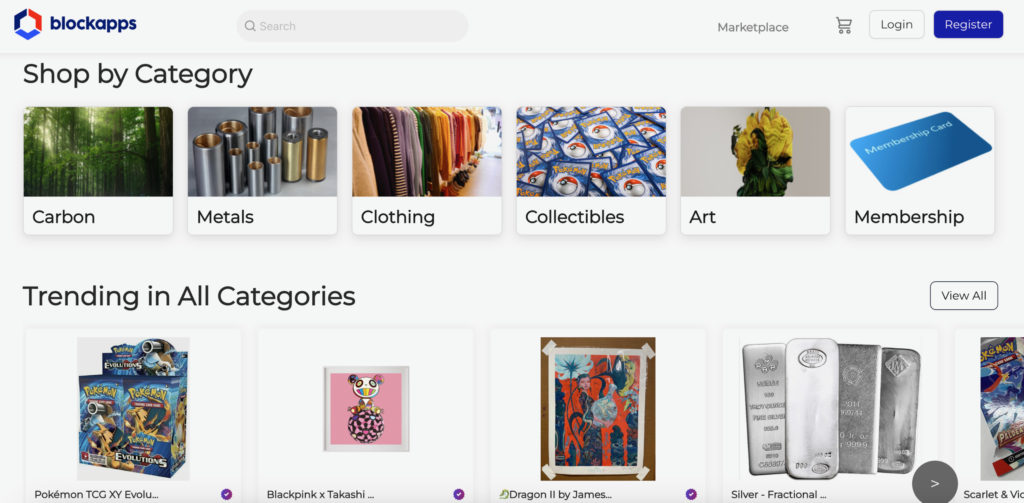
Photo at top of post: BlockApps co-founders Kieren James-Lubin, left, and Victor Wong, right.
READ MORE IN REFRESH MIAMI:
- Blockus banks $4M to power the web3 gaming revolution
- It ain’t your grandpa’s oracle! Delphi unlocks scalability for thought leaders
- With investors betting on the ‘long game,’ Betr raises $15M at $375M valuation
- Gaming monetization marketplace Scuti secures $10M
- Lucy Guo’s Passes raises $40M Series A to turn top content creators into tomorrow’s big brands

- Terminal acquires Miami AI startup Stationed, plans to double team in Wynwood - October 22, 2026
- Vylit is giving creators a new way to find their fans - October 21, 2026
- Q Intelligence is taking a swing at Hollywood’s money problem - October 21, 2026