


In aviation, a failed oil system is the kind of problem that can end a mission in seconds.
For decades, the solutions were bulky, complex, and built with conservative assumptions that often made systems heavier and more expensive than necessary. But a Miami-based startup believes there is a better way to keep engines alive in the air.
And it all comes down to a small device called a pod.

Zulu Pods, led by co-founder and CEO Rob Sladen, has spent the past several years developing compact oil system technology for modern propulsion systems used in drones, missiles, and other aerospace applications.
“We started with a focus on expendable oil systems for expendable jet engines,” Sladen told Refresh Miami. “Then the Army saw our technology solution of unitizing functions like a tank and a pump into one unit as a really good backup oil system.”
That early product – known as the ZPod – turned out to be flexible enough to serve two needs at once. It could lubricate short-duration propulsion systems used in drones or missiles, while also functioning as a backup oil system if a helicopter engine suddenly lost lubrication mid-flight.
Instead of focusing on a single niche component, the company now sees a broader role for itself in the aerospace supply chain.
“The backbone of aerospace and defense is built around components and subsystems,” Sladen said. “The big giants assemble everything together. Our vision is to be a next generation component and subsystem company.”
The traction is starting to show.
About a year ago, Zulu Pods’ technology was integrated into just two propulsion platforms. Today the company has expanded into new applications beyond turbojets, including turbo generators used to generate electricity and rotary engines used in drones.
Another key indicator of growth is being listed on a platform’s “build material,” meaning engineers have selected a component for use in a propulsion system. A year ago Zulu Pods appeared on two build materials. Now the company is working toward ten.
“In our industry, being listed on a platform’s build material means the engineering team has officially chosen your technology for the system,” said Sladen, who co-founded the company with with his wife, Daniella, Zulu Pods’ CIO.
The next phase is production.
Last year the company delivered around a dozen pods, many provided free so customers could run tests and gather data. This year Zulu Pods expects to deliver about 60 units, with some beginning to generate revenue.
“All of the R&D is behind us for this product,” Sladen said. “Now we’re entering final certification and qualification with customers.”
If things move as planned, the ramp could accelerate quickly. The company expects production to grow from tens of pods this year to hundreds next year and potentially thousands annually after that.
Zulu Pods is also developing other systems, including the EPod, a technology designed to keep helicopters flying during catastrophic oil loss events. The company was recently down-selected by the U.S. Army to submit a final proposal as a prime contractor to continue advancing that technology.
“We’ve been working toward this moment for about five years,” Sladen said.
The proposal includes collaboration with a major rotorcraft manufacturer, highlighting growing interest in the startup’s technology.
For Sladen, the company’s progress reflects a larger shift in the defense industry. Venture capital is showing greater interest in defense hardware, while modern warfare is pushing companies to move faster.
“I think there’s a perfect storm happening,” Sladen said.
“You have access to capital, you have a huge focus on speed to market, and you have a lot of new problems that need solving,” he added. “If you’re an entrepreneur, that creates opportunity.”
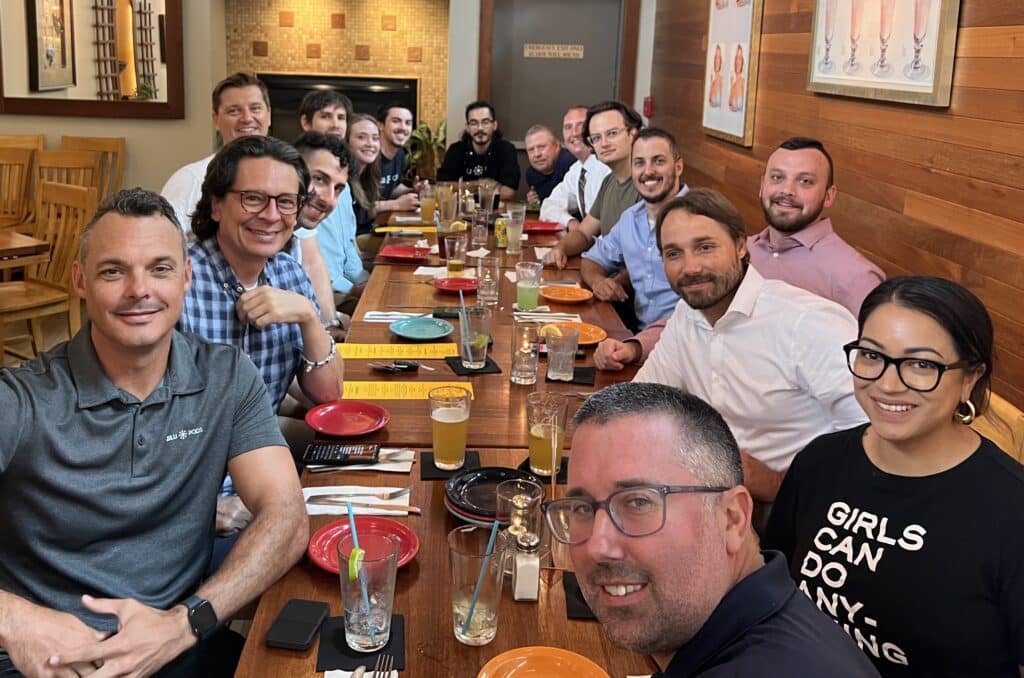
Pictured above: Zulu Pods team members.
READ MORE IN REFRESH MIAMI:
- The mood at FVCC: Investor optimism about Florida’s tech trajectory
- This husband and wife duo has secured $3M+ to help the DoD revolutionize fluid delivery systems
- Your drone in a box? Look no further than Hextronics
- FIU trains veterans and first responders in critical cyber defense
- Fovionics is creating AI-powered glasses for the visually impaired

- Sunlight AI raises $17.4M to bring back the independent doctor - October 20, 2026
- Dapta raises $6M to give Main Street businesses an AI advantage - October 13, 2026
- David Blumberg on why Miami’s tech moment is still gaining ground - October 13, 2026