


Every construction project hits a wall long before concrete is poured or steel goes up. It happens when a set of plans lands on someone’s desk at city hall and enters the slow, grinding phase known as plan review.
That’s the stage CodeComply.AI wants to speed up.
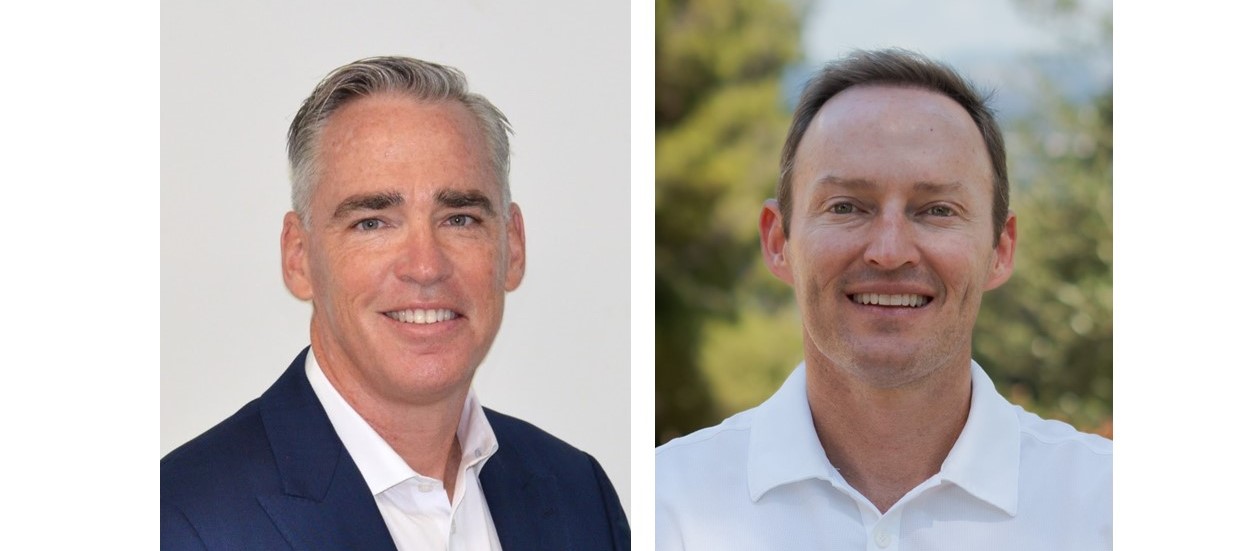
According to co-founders Patrick Hughes and Patrick Murphy [pictured above], the long delays have less to do with paperwork and more to do with the tedious, manual work hiding behind it.
“Permitting software is more about the flow of the building plans. You can upload, you pay, you can monitor,” Hughes told Refresh Miami. “What’s really missing is the plan review software. That’s the tool that we provide that actually gives the plan reviewer the ability to get through the review quicker.”
Hughes, who comes to CodeComply.AI after a long career in finance, stressed that reviewers aren’t being replaced. “There’s still the human judgment that’s important,” he said. “We supplement what they’re doing and give them the ability to do those repetitive tasks that much quicker.”
Murphy, previously a U.S. congressman, is still part of his family’s business, Coastal Construction Group. He noted that most people misunderstand where the technical challenge lies. Reading text is one thing. Reading drawings is another.
“There’s a big difference in being able to use an LLM to read text about codes,” he asserted. “The unique thing is the ability to read the plans and apply that text to a set of blueprints, which are different every single time.”
Nothing in construction is drawn the same way twice. “There’s no standard way to draw a sprinkler or fire-rated drywall or exits,” Murphy said. Their system is built to identify all of that and match it to thousands of pages of rules.
Hughes shared the example he uses most. “If I gave you a set of plans, the first thing is how many people can be on that floor,” he said. Before software, reviewers had to measure every room, guess the type, apply factors, and run the numbers by hand. “Now instantly, we can tell you the number of people that can be on the floor.” He said that early alignment saves hours for both sides.
That speed is driving their growth. “We have basically two categories,” Murphy added: private and public. Private firms move faster, and interest is coming from both global design firms and small local offices. On the public side, they recently secured an RFP covering more than 200 cities across Texas.
Hughes said governments are paying attention because of pressure from above. “Back in April they put out an action plan for permitting technology,” he said. Local officials know slow reviews raise costs and stall development. They’re looking for ways to move sooner.
The irony, he added, is that many cities expect tech to take years to install. “We can be implemented in a matter of hours,” he said. Everything runs online.
When looking ahead, Hughes wants architects and reviewers in one shared workflow so mistakes surface earlier. Murphy tied the long-term mission to housing. “Developers are often carrying these properties for nine, ten, twelve months just waiting on approvals,” he said. Cutting that time frees real money for actual building.
Hughes added that many reviewers are close to retirement. “With that goes all the knowledge,” he said. They see their role as helping cities keep work moving as those staff changes hit.
The two Patricks hinted that a fundraise is likely soon, and the company has experienced 4x growth year over year. The company currently has 20 employees. For now, the two Patricks are focused on shaving hours, days, and months off a part of construction that rarely gets attention but shapes every project.

READ MORE IN REFRESH MIAMI:
- From Madrid to Miami, Lodgerin is building the future of global mid-term rentals
- Pelico raises $40M to scale the next generation of supply chain AI, all from new base in Miami
- With $2M in tow, AI startup CodeComply.Ai aims to accelerate construction approvals and reshape compliance checks
- From fine print to fast growth, Document Crunch is reshaping construction risk
- SkyWind Solutions is bringing hyperlocal tide forecasts to Florida’s coastal communities
- SmartBarrel’s bet on in-person work is paying off – and reshaping the future of construction labor

- Terminal acquires Miami AI startup Stationed, plans to double team in Wynwood - October 22, 2026
- Vylit is giving creators a new way to find their fans - October 21, 2026
- Q Intelligence is taking a swing at Hollywood’s money problem - October 21, 2026