



With a high energy light show featuring live music and dance, Melissa and Manny Medina kicked off the eMerge Americas Conference at the Miami Beach Convention Center on Thursday. This year’s conference is bringing together 400 exhibitors, 300 speakers, pavilions for AI, national security, healthtech and SMBs, and content spanning AI, quantum, healthtech, fintech and national security.
“Miami has a great opportunity to become a hub of innovation. The acceleration is palpable … you see in AI and quantum. you see in FinTech and, of course, in healthtech, and I think the verticals will continue to grow. Miami will continue to grow, and I’m very, very proud of that,” said Manny Medina, who founded eMerge Americas in 2013 to help bring tech to the region.
And this week has been full of tech. The conference follows eMerge’s AI hackathon at The Lab Miami that attracted 400 developers, eMerge’s National Security Demo Day at PortMiami, and AI and quantum master classes earlier this week.
Here are some snippets from Day 1:
Leadership in the age of AI and tech acceleration
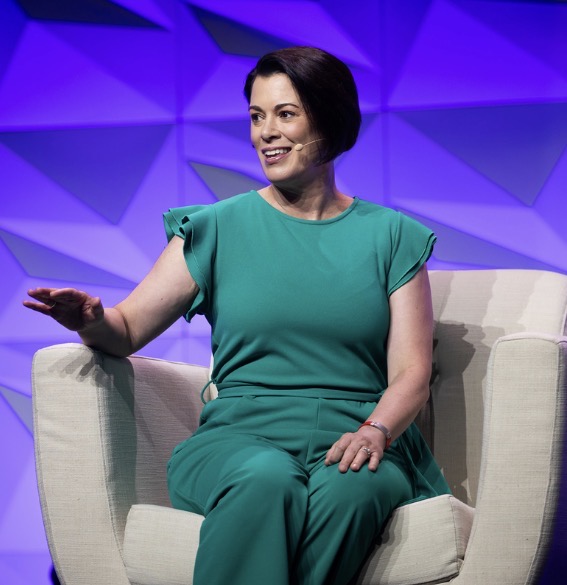
As the first female pilot selected to fly in the US Air Force Demonstration Squadron known as the Thunderbirds, retired combat veteran Nicole Malachowski knows something about leadership. She mustered skills from her 21-year military career to overcome a sudden, devastating tick-borne illness that left her hospitalized for nine months and then, re-learning to walk, talk and read over another year and a half.
As a pilot, Malachowski is clear on leadership: “Never let the jet fly you. You have to fly it.” She feels the same about tech. Humans need to run it, with strong ethics.
“The more complex technology gets, the more we need humans,” she told a Main Stage audience at eMerge 2026. Too often, she said, the focus on tech is efficiency, not values or accountability: “We can’t have an abdication of moral responsibility.”
To bolster judgement among tech builders and users, Malachowski suggests schools focus more on critical thinking and the humanities, including philosophy and ethics. “We don’t work for technology. Technology needs to work for us,” she said.
Waymo rides its way to adoption – and Miami
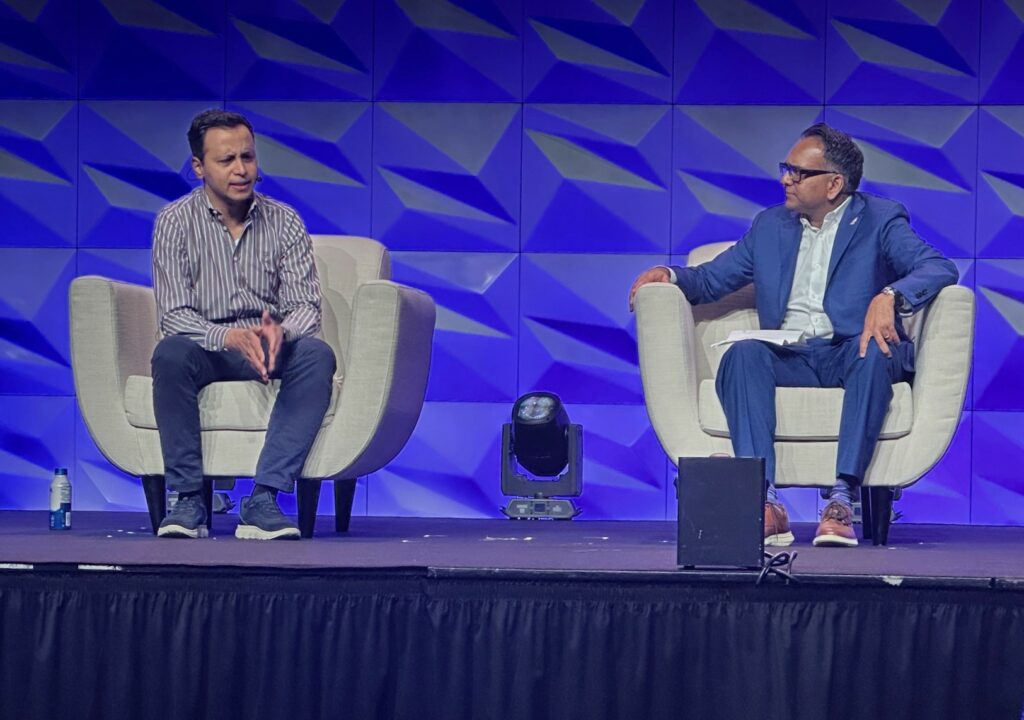
More than a decade before AI became a household word, Waymo as part of Alphabet was already at the forefront of AI, developing the tech that would ensure its autonomous vehicles could make split second decisions in real time in very complicated environments. The reason the service is now available in 11 cities including Miami, is because its service has the safety record that has built trust among riders and stakeholders. “Millions of miles of actual on-road test driving, billions of miles in simulation, and the proof is in the pudding. Now we can show, based on real 200 million miles of driving without anybody in the front seat, that this technology is 13 times safer than when humans are behind the wheel,” said Saswat Panigrahi, CPO of Waymo, in an on-stage conversation with Lab22c founder Saif Ishoof.
With the safety record, it was easier to convince cities’ stakeholders to get on board. Building that trust city by city, Waymo announced this month the service was fully available in Miami, its 11th US market. “Here in Miami, we have felt extremely welcome. It’s a very innovation-forward city.” It’s a cultural capital with big transportation needs, too.
Today Waymos are delivering half a million trips every week across its 11 cities, and those 500,000 trips represent 10x growth over the last two years, when it was about 50,000. Going forward, Waymo aims to integrate with public transit systems as last-mile solutions and continue to expand based on user feedback and city needs. Besides for getting from point A to point B, Waymos offer privacy for date nights or taking business calls. So where does one sit in a Waymo, front or back? Some like the full view of the passenger seat, others prefer the back, he said. “It’s your space. You can own it.”
Agentic AI is opening the door to a new kind of security risk
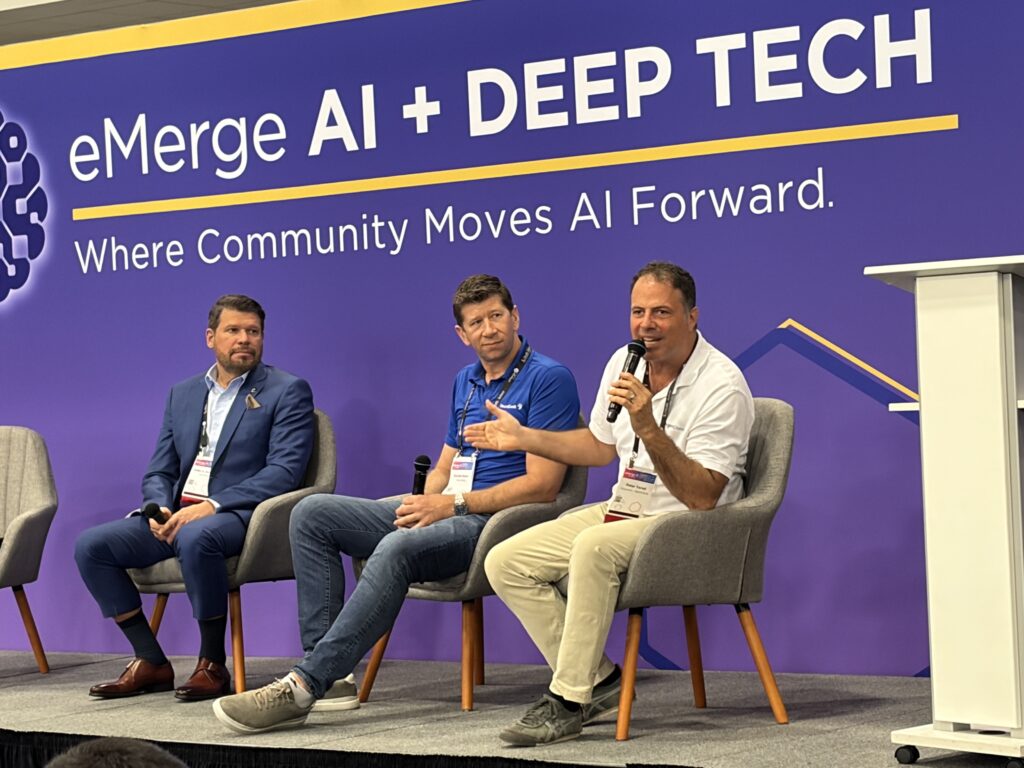
In a panel discussion on agentic AI, InCountry’s Peter Yared asserted that as AI systems become more autonomous, the risk will shift to places most companies don’t fully see yet.
“A lot of AI relies on paid tools and open-source components underneath,” Yared said, pointing to a growing issue around vendor and software supply chains. As teams layer models, APIs, and libraries together, vulnerabilities can slip in deep within the stack.
“It’s now very easy to find and exploit weaknesses,” he said, noting that attackers are targeting older libraries and even inserting malicious code after building trust in open-source projects. “Anything you use can be compromised at a very low level.” That dynamic is creating what he described as an “AI war,” with both attackers and defenders using AI to move faster. New tools are already emerging to scan for and fix vulnerabilities, but the pace is tight. “Hopefully this stabilizes in the next six to nine months,” he added.
Yared also touched on a more practical challenge: cost control. His approach is simple. “When people are experimenting, you don’t want to limit them,” he said. “But once it’s live across a company, you have to cap spend.”
Healthcare RX: Democratize the cost of drugs
Dr. Alez Oshinowski, co-founder and CEO of Mark Cuban Cost Plus Drug Company, described his transition from radiology to founding a pharmacy business built on transparency resulting in “cost plus pricing” to undercut inflated generic drug markups driven by intermediatries. In a conversation on-stage with Andrew Papa, founder of Miami-based Papa (coincidentally, they were in the same Y-Combinator cohort in 2018), Oshinowski recounted the company’s early success reducing prices such as for albendazole from about $400 to $5 a tablet. Then, Mark Cuban’s endorsement – which originated from Oshinowski’s cold email to Cuban answered within five minutes that then led to a conversation and then a small investment to start – accelerated growth and product expansion. “You’d think if you were a celebrity billionaire you’d be busy doing other stuff, but he’s such a workaholic,” Oshinowski said.
The next year, the then very small team was able to get three companies to do 100 products with us, and that’s when “Cost Plus Drugs really blew up and became a thing,” he said. Oshinowski has positions the business as a parallel supply chain for the pharma industry based on fundamental principals of transparency and honest dealing, instead of pharmacy benefit managers ( PBMs) and wholesalers that he says double or triples the costs through complex intermediary mechanisms.
Today Mark Cuban Cost Plus Drugs is also a manufacturer for certain drugs that are in short supply. The plant, in Dallas, was designed to manufacture multiple small batches.
While the company is strong in generics now, looking ahead, he envisions the company democratizing personalized medicine by dramatically lowering costs and scaling individual treatments. He also emphasized the company’s broader goal of disintermediating monopolies rather than replacing all PBM’s directly.

Cybersecurity risks at hospitals in the AI age
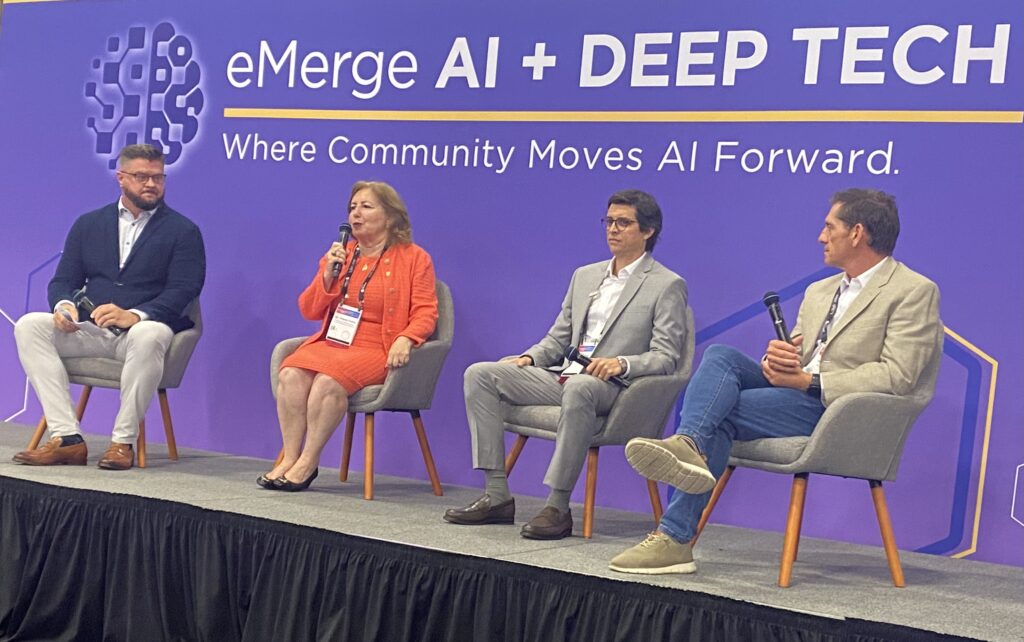
For all its promise, AI also brings new risks, especially for cybersecurity at hospitals and large healthcare organizations, according to a panel on digital health risks.
“The bad guys are using AI to accelerate their attacks,” said John Riggi, an FBI veteran who serves as a national advisor on cybersecurity and risk for the American Hospital Association. Defenders are using AI to counter and bolster security too. Still, said Riggi, “it is yet to be seen who comes out on top.”
Countering attacks is not a problem just for IT departments but affects operations and patient care too. One recent ransomware attack on a US hospital prompted patients to be dispersed to other facilities. Increasingly, cybersecurity at hospitals needs to be elevated “to the board level” and requires “preparedness plans” specifying when to turn off patient services or not, said Connie Barrera, Chief Information Security Officer (CISO) at Jackson Health System in Miami.
She sees challenges multiplying in the coming years, as quantum computing becomes available. With more powerful computers, bad actors have the potential to crack into hospital systems faster, possibly “within a few hours,” said Barrera.
As AI is integrated into more tasks in healthcare, concerns arise too about the morals behind the AI programs. “I ask questions about ethics: How is this model being trained?,” said Mauricio Angee, CISO for the University of Miami, UHealth and the Miller School of Medicine.
Higher education in the AI era
Rapid AI deployment also is prompting schools to rethink how and what they teach. Educators recognize that AI may replace many entry- and mid-level jobs.
The University of Miami now is streamlining its curriculum and using AI to develop more customized studies for students. Studies must increasingly focus on judgment and resilience, not just facts or past knowledge, said Dr. Yelena Yesha, chief innovation officer at the U’s Institute for Data Science & Computing. “AI can’t teach you critical thinking and the ability to manage change,” said Yesha.
As knowledge becomes more of a commodity, even classes available on YouTube, business schools also need to adapt. That’s why entrepreneur Alvaro Schocair in 2020 founded Brazil’s Link School of Business, geared to entrepreneurs and innovators. Link now hosts some 1,100 students, and its alumni have created more than 200 startups that have raised more than $80 million for their ventures. “Our intention is to come to the US and replicate what we did in Brazil in the US,” Schocair said. His advice to educators: “Take students out of the classroom. Show them the real world.”
Eric Trump, Bitcoin, and a little Miami swagger close out Day 1
It wouldn’t be #MiamiTech or eMerge Americas without some crypto in the mix… and the closing keynote leaned all the way in. On stage, Eric Trump, American Bitcoin’s Asher Genoot, and former Miami Mayor Francis X. Suarez made the case that Miami is helping shape where Bitcoin, energy, and digital infrastructure go next.
For Trump, the move into crypto was personal. “I woke up one day in 2021 and I had been canceled by everybody,” he said, describing how banks pulled accounts and forced a rethink of how money moves. “We literally didn’t have rails to conduct business.” That experience pushed him toward what he now sees as the future. “There’s never been a time where a digital technology didn’t overtake an analog one,” he said. “And that’s exactly what’s happening in the monetary world.”
Still, he was quick to frame Bitcoin not as purely digital, but deeply tied to the physical world. The pitch from both Trump and Genoot centered on infrastructure: power, data centers, and the machinery behind the network. “We didn’t see Bitcoin as just a digital asset,” Genoot said. “We saw it as the physical infrastructure that secures the network.”
That perspective has shaped American Bitcoin, the company they launched together. In just over a year, Genoot said the business has raised more than half a billion dollars, built around energy capacity and mining operations.
For his part, Suarez, who has long pushed crypto adoption at the city level, pointed to real-world use. “I was the first public official to be paid in Bitcoin,” he said, adding that Miami employees were also given the option to take their salaries in it. Suarez also leaned into Miami’s role in all this, and the focus of his administration in trying to create the conditions for builders to show up. “Our strategy was simple,” he said. “Keep taxes low, keep people safe, lean into American innovation.”
Energy, unsurprisingly, came up again and again. “Every single one of these technologies requires power,” Genoot said. “We need to build more generation in the U.S. Trump took it a step further, tying energy directly to national competitiveness. “You can’t win the financial revolution without energy,” he said. “None of it works without cheap power.”
Trump pointed to how quickly institutions have shifted. “A year ago we were probably at a one out of ten,” he said of crypto adoption. “Now we’re at a seven.” And while the conversation touched on policy, infrastructure, and global competition, it kept circling back to the idea this fundamental shift is already happening. “The cat’s out of the bag,” Trump said. “It’s not getting put back in.”

eMerge Americas continues on Friday with more keynotes, including by Tim Tebow, the finale of the Startup competition in which one startup will take home $125K, and of course more time for networking.
UPDATE: Find day 2 coverage here: eMerge day 2 cut through the noise on AI, startups, and what it really takes to scale in South Florida and eMerge Americas goes global, with Poland, Italy, Curacao among new exhibitors this year
Doreen Hemlock and Riley Kaminer contributed to this report.
READ MORE IN REFRESH MIAMI:
- National Security Demo Day a salute to the power of tech and innovation
- Miami Tech Summit celebrates that the AI future is here and there’s still time to get it right
- Miami’s Endeavor Summit makes the case for founders building ‘elsewhere’
- Miami wants to be the bridge, and Startup Olé made the case
- Maker Faire Miami returns this weekend with biggest festival yet. Bring your kids!
- Israel Tech Week Miami set for second year, bigger with more tech sectors
- Carnegie Mellon names dean and VP of Miami campus. Let’s meet him. - October 20, 2026
- 10+ things to know in #MiamiTech: Neko Health Scans on way, big HQ move for Hut 8, Palantir & Ondas team up, Mana Tech & Notion partner, Jaca bags $1M & news from INMune Bio, MDC, CodePath, The Source, Google, LaunchEd & more - October 20, 2026
- From Miami to the World: How a Miami 16-year-old is scaling access to tech education - October 15, 2026