



Mehdi Taifi knows what it looks like when a product catches on. As an early employee at Robinhood, he saw firsthand how the right idea at the right time can spread fast.
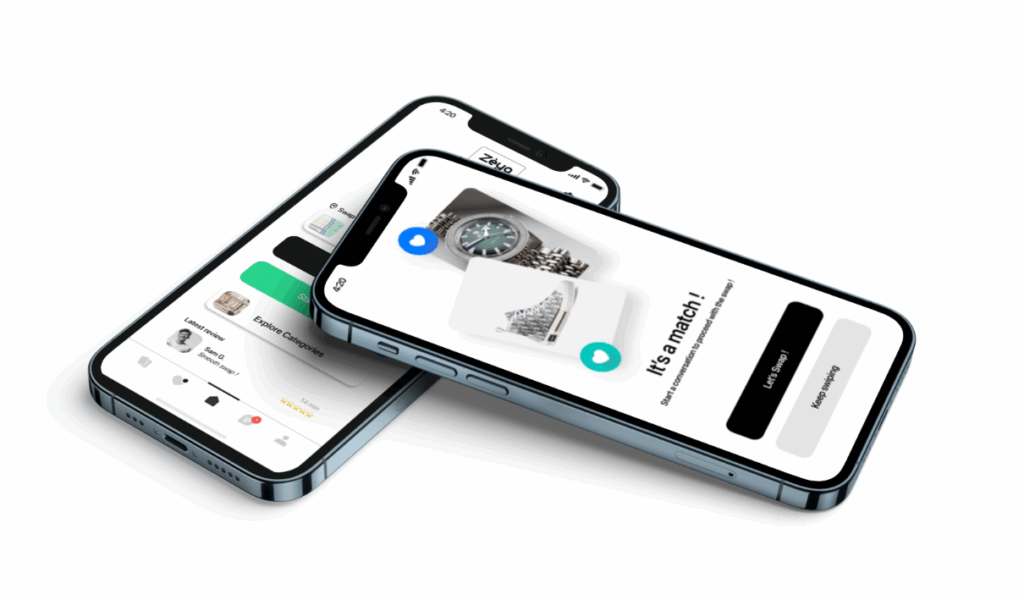
Now based in Miami, he’s applying that instinct to Zéya, a swipe-to-swap marketplace that’s trying to bring bartering into the mainstream.
The idea is simple: match with people based on what they want to trade. No cash, no clutter, just local, item-for-item swaps.
“The goal is to create something that feels familiar but solves a different kind of problem,” Taifi [pictured above] told Refresh Miami. “People are tired of hoarding stuff or selling it for pennies. Swapping is efficient and fun.”
Raised between the U.S. and Morocco, Taifi saw informal exchanges everywhere growing up. Now he’s betting that the future of secondhand might look a little more like the past.
Zéya launched in late 2024 and has already reached over 5,000 downloads across several cities, with Miami, Denver, and Dubai among the app’s most active markets. Denver, in particular, is leading the pack – no surprise given the city’s strong sustainability culture.
But Miami is another rapidly-growing market. Taifi explained that, after relocating to Miami last year, he was struck by how many people were selling, shipping, and tossing out things they could easily trade with neighbors.
“You need early adopters who believe in the mission,” he said. “That’s what we’re seeing in places like Denver and Miami. People there are already thinking about reuse and secondhand in a different way.”
While the app is still pre-revenue, Taifi has a clear monetization plan: hyper-local ads, a paid premium tier, delivery partnerships, and a small transaction fee for swaps that include a cash component. But for now, the focus is traction.
Zéya recently ran a 24-hour billboard campaign in Times Square to boost awareness, and Taifi says the app is averaging around 100 daily active users, with real swaps happening daily.
“It’s not just people swiping and disappearing. We’re tracking actual completed trades,” he said. “That shows us the app is working and that this isn’t just a novelty.”
After years in high-growth fintech, Taifi began thinking less about speculation and more about sustainability: how tech could support local economies instead of just scale.
The longer-term vision? No less than a cultural shift. Taifi wants swapping to feel as natural as buying or selling, especially in dense, urban environments where community-based exchange could thrive.
“Nobody really thinks about bartering as a default behavior,” he said. “But they should. It’s practical, it’s sustainable, and it builds local connections in a way platforms like Poshmark or Facebook Marketplace don’t.”
Zéya is still in its early stages, with a funding round in progress and expansion plans for cities like Seattle and Portland. But Taifi is thinking big. “We’re past the idea stage. We’re past the prototype. Now we’re scaling,” he said. “If we can make swapping normal – make it cool, even – that’s a real win.”
READ MORE IN REFRESH MIAMI:
- MX Locker grows beyond dirt bikes, aims to redefine the entire power sports marketplace
- Looking for zero-waste deliveries and refills of sustainable staples? Startup The Rounds has got you covered
- Could the Metaverse make fashion more sustainable?
- Kind Designs raises $5M to scale its 3D-printed Living Seawalls, with Mark Cuban returning as an investor
- MayMaan is harnessing the convenience and power of internal combustion without the environmental harm of fossil fuels

- MyBundle has streaming covered. Now it’s ringing in mobile. - October 26, 2026
- Terminal acquires Miami AI startup Stationed, plans to double team in Wynwood - October 22, 2026
- Vylit is giving creators a new way to find their fans - October 21, 2026